










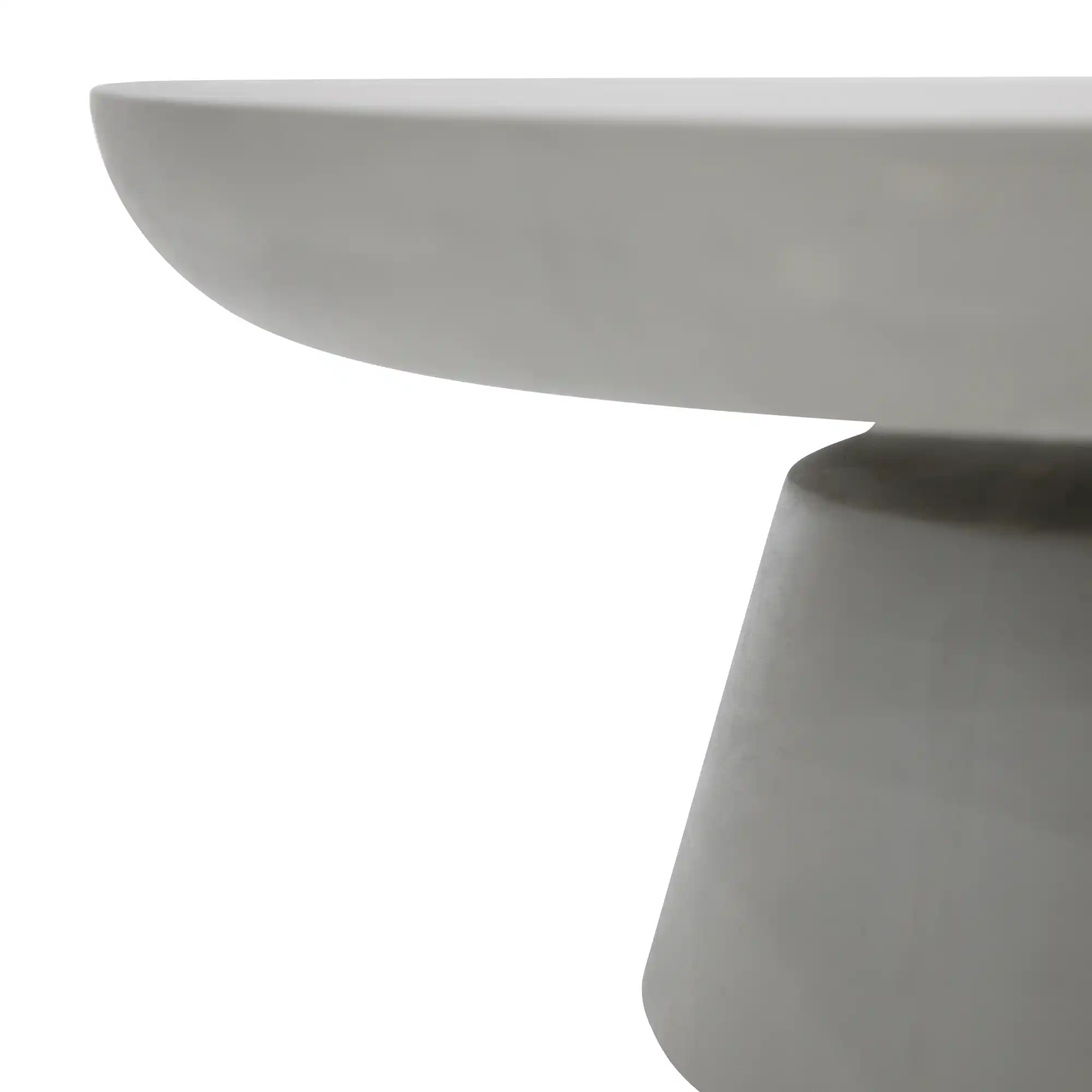
GFRC is robust but not maintenance-free – care decides whether a surface still looks the same after two years. Caring for concrete furniture does not require special products, only the right ones: warm water, a soft cloth and a neutral cleaner. Everything else causes more damage than the dirt itself.
This FAQ article follows the calendar order of the topic: first everyday cleaning, then stains and efflorescence, followed by resealing and small repairs, and finally winter storage for furniture, fire pit and fountain. All intervals and temperatures come from the ELEMENTI care instructions.
Warm water, neutral cleaner, soft cloth – then always dry completely.
Acid, lye, scouring agents, steel wool, alcohol and oil-based polish damage the seal.
Reseal every 3–6 months, at the latest after 12 months.
Below −5 °C bring indoors or cover; let the surface dry completely first.
For care products and spare parts, these areas are relevant:
1 How is concrete furniture cleaned properly?
Basic cleaning consists of four steps and takes a few minutes. The last step is the decisive one: if water remains on the surface, stains and rims form – and a damp surface is the basis for efflorescence.
Which four steps are part of cleaning?
- Mix warm water with a mild cleaner.
- Wipe off the dirt with a soft, clean cloth or sponge.
- Remove all cleaner residue with a damp cloth.
- Wipe the surface completely dry with a dry cloth.
Which cleaners and tools are off limits?
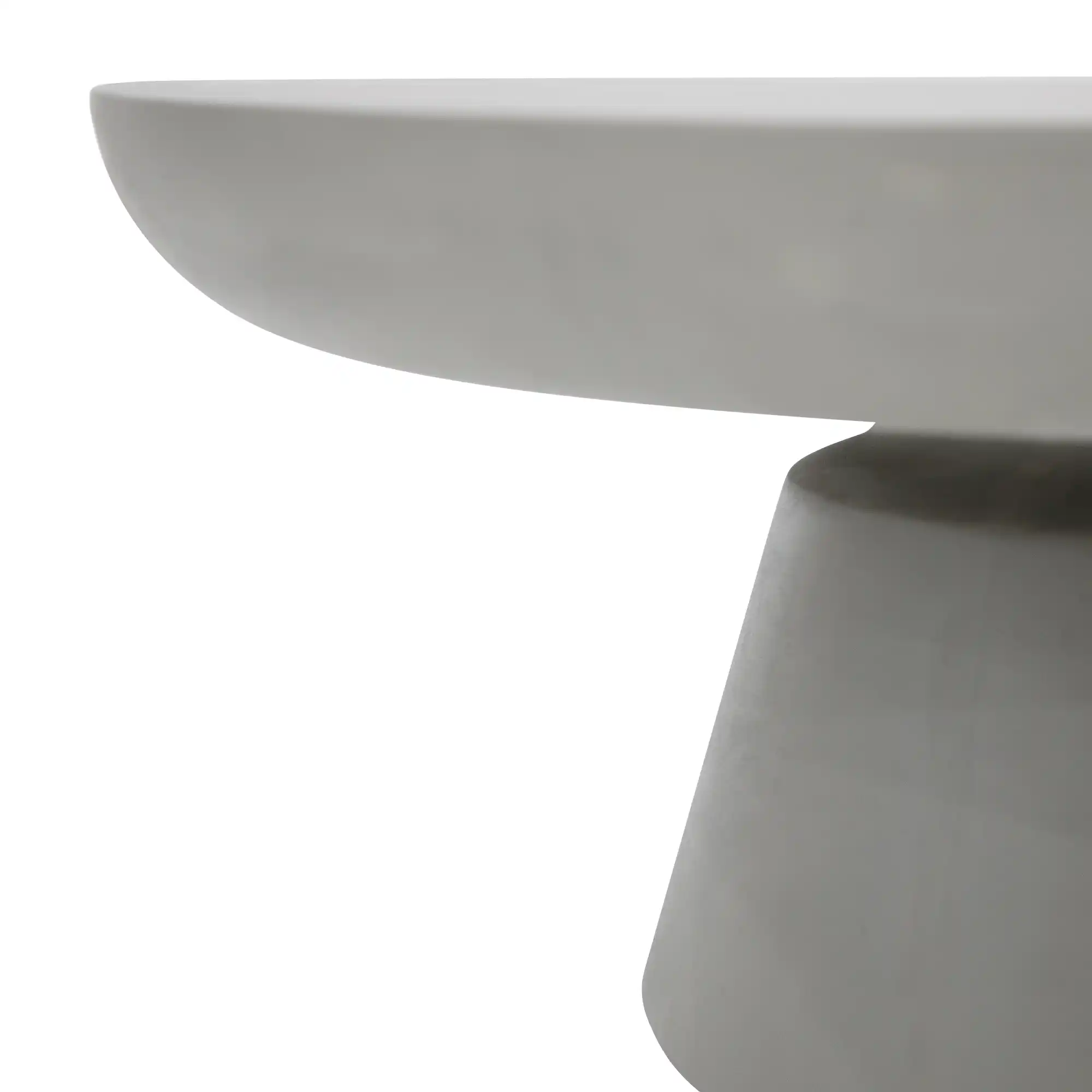
You must not use acidic cleaners, strong alkaline agents, oil-based polishes, scouring powder, steel wool, hard brushes or rough sponges. They bleach the surface, attack the seal or leave scratches. Only soft microfibre cloths are suitable – the kind used for glass, kitchen appliances and coated pans.
| Suitable | Not suitable |
|---|---|
| Warm water with a neutral cleaner | Acidic cleaners, vinegar cleaner, strong alkaline agents |
| Soft microfibre cloth, sponge | Steel wool, hard brushes, scouring pad |
| Dry cloth for the final wipe | Oil-based polishes, scouring powder |
| Water-based resealing product | Alcohol as a cleaning agent |
May I clean the surface with alcohol?
We advise against it. Alcohol attacks the surface seal and in the long run leads to a surface that looks dull or patchy. For daily cleaning, a cleaner with a neutral pH value is sufficient.
Do I always need coasters?
We recommend them for lasting protection of the surface. A coaster prevents water from remaining under the glass and forming rims; a trivet prevents heat from discolouring the seal and leaving round marks. A base is also advisable under vases, because water standing for a long time can leave stains.
2 Stains, efflorescence and stubborn dirt
With stains, time matters more than the product. Anything blotted up immediately usually leaves no trace; anything that can soak in overnight leaves a shadow. So the rule is: blot first, then clean – and dry at the end.
What should I do about red wine, coffee or oil?
Blot the liquid immediately with a clean, dry cloth so that nothing remains standing on the surface. If the dirt has already soaked in, briefly dampen the area with clear water and carefully absorb the water with a clean cloth. Do not let the water dry on the surface – wipe it completely dry instead.
Which substances have to be removed immediately?
Sunscreen with dimethicone and aloe ingredients, nail polish remover, red wine, vinegar, lemon juice, ketchup, citrus fruit and olive oil are among the critical substances. They can attack the seal or leave irreversible marks. Wipe such residues off immediately and dry the area afterwards.
How long may oil remain on the surface?
Ideally not at all – the longer oil soaks in, the harder it is to remove. Absorb it first and then clean the area with a neutral cleaner. Afterwards, wipe it completely dry so that no moisture remains in the pore.
What is white efflorescence – and how is it removed?
Efflorescence is a normal reaction in a damp environment and not a quality defect. For targeted treatment, brush the affected areas with a 5 % citric acid solution. Because this is a special case and not everyday cleaning, rinse thoroughly with clear water immediately afterwards, dry the surface and then apply a water-based protective product again. For normal cleaning, a neutral cleaner remains the right choice.

3 Cleaning the fire pit and the fountain
On the fire pit, two zones must be distinguished: the burner and tray surface and the GFRC housing. With a fountain the focus is less on appearance than on the pump circuit – there, cleanliness decides the service life.
How is the gas burner cleaned?
For normal cleaning, warm water, soap, ammonia or a cleaner with a soft cloth or sponge are sufficient. Stubborn dirt and discolouration can be removed with a stainless steel cleaner, applied with a soft cloth along the polishing direction. Make sure that no cleaner gets onto painted or plastic parts; near the coast, cleaning intervals are shorter, because corrosion occurs faster there.
How is the fire pit housing cared for?
Warm water with mild washing-up liquid, a soft cloth and a dry cloth for the final wipe – that is all it needs. Petrochemical or abrasive cleaning agents, hard brushes and rough sponges are not permitted. Do not place objects on the surface, do not eat directly over it, and cover the fire pit when it is not in use.
What has to be cleaned on the smart ethanol fire pit?
Clean the burner tray regularly of residues, because combustion deposits affect the sensitivity of the fill level sensor. Wipe only lightly and do not change the position of the filling opening and the sensor. Cleaning at least once a week makes sense if the fire pit is in frequent use.
What should I watch out for with the fountain?
Water evaporates, and without a change, algae form over time. Check the water level regularly, change the water at intervals and clean the pump and filter material every 2 to 3 months. If the pump does not remain fully submerged during operation, dry running threatens – the most common reason for pump damage.
How is a sintered ceramic top cared for?
If the surface is cleaned regularly and kept dry, a damp cloth with normal cleaner and water is enough. Use only soft microfibre cloths so that the polished surface is not scratched. Also avoid letting acidic foods, drinks, oils or cosmetics dry on the top.
4 Resealing and repairing small damage
The surface of GFRC is sealed – and that seal wears down. Care therefore includes a fixed interval: reseal before dirt sticks and water no longer beads off. Products and spare parts for everyday concrete furniture care can be found in the accessories area.
How often does it need resealing?
For outdoor products we recommend surface care every 3 to 6 months: clean the surface, let it dry completely and apply a water-based protective product thinly with a soft cloth. If you work at longer intervals, you should reseal after 12 months at the latest.
How do I recognise that the seal is fading?
Three signals show it clearly: the surface attracts dirt more easily, the colour looks darker, and water no longer forms droplets but soaks in immediately. Slight changes after long use or after cleaning are normal and not grounds for a complaint – they simply belong to the next care cycle.
How do I apply the water-based protection myself?
First clean the surface thoroughly and let it dry completely until no dust sticks to it. Apply the protection thinly to the concrete surface with a soft cloth and work in small sections. After it has dried completely, wipe off any residue; work in a dust-free environment, ideally in the shade.
Which product may I use?
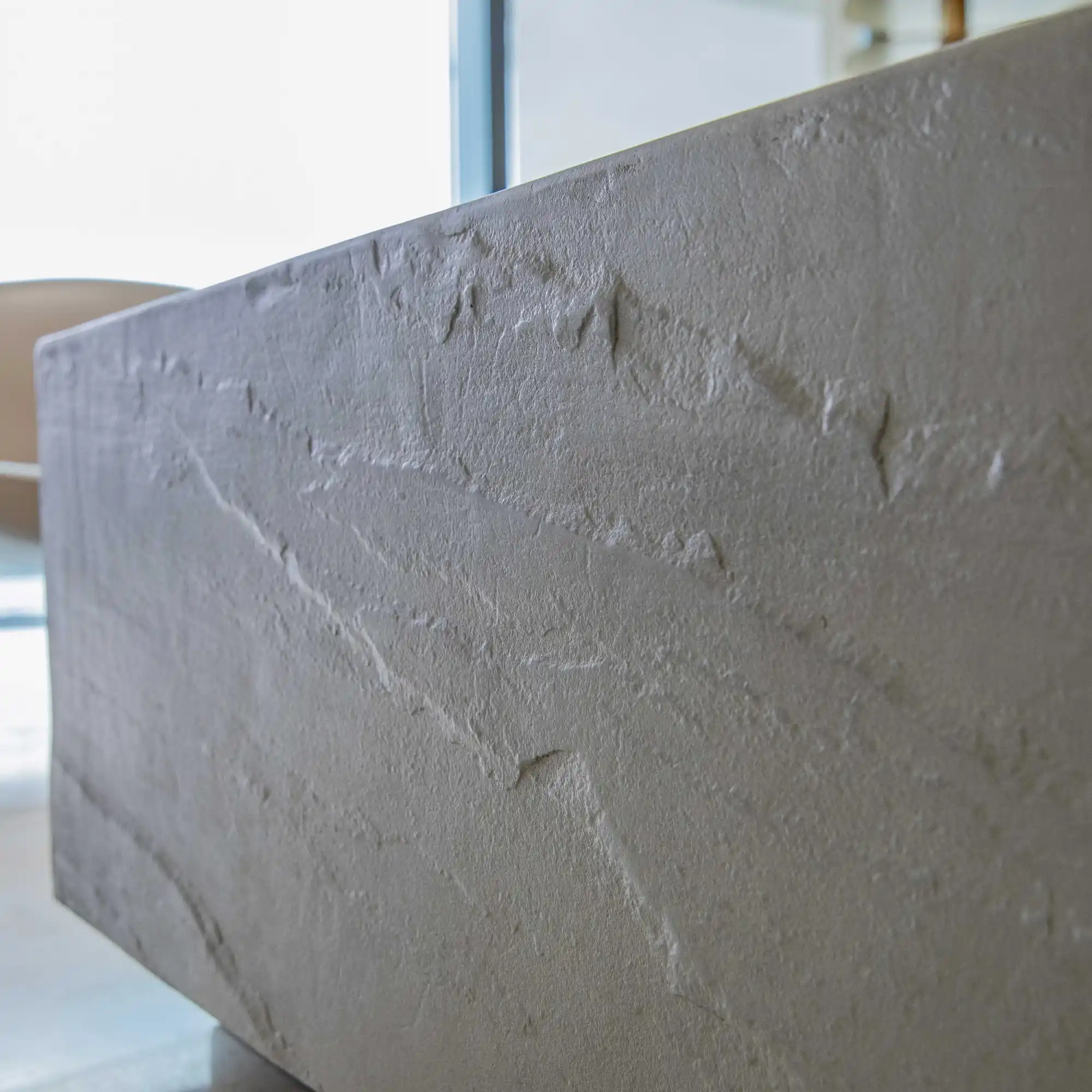
For the second protective layer, film-forming seals approved for GRC are suitable – for example products from Truseal or UC Coatings. What matters is that the product is film-forming and released for composite materials. Universal protective agents of unknown composition should be avoided and can change the surface irreversibly.
How are small scratches or chipped edges repaired?
Small defects can be repaired with the matching ELEMENTI repair liquid: apply evenly, let it harden, smooth it down – the protective component means the repair area is sealed again. For depressions or holes, proceed in three steps: repair, let it harden, sand it level. One note belongs with this: after the repair, the colour may differ from the original surface; that is a normal effect and not a defect.
May I sand or paint it myself?
No. Sanding, painting, dismantling or rebuilding on your own initiative leads to loss of warranty and can damage the surface irreparably. The one exception is reworking an edge with the ELEMENTI repair liquid – there too the surface is sealed again afterwards so that the protection is preserved.
When do I need spare parts for the fire pit?
Check gas hoses monthly and additionally at every cylinder change; cracks, bleaching or signs of ageing mean immediate replacement with a hose of the same length and quality. The date printed on the hose or the country-specific replacement cycle also applies. Wear parts include the thermocouple, ignition electrode, spark plug, battery, gas hose and pressure regulator – only original parts should be ordered.
Does the gas fire pit need a regular inspection?
Yes, at least once a year by a qualified technician. The inspection covers the secure seating of the burner and possible corrosion, the air mixer being clear of insects, cobwebs or dirt, the tightness of all gas connections and the function of the ignition system. Wear parts are checked as well – until a defective component is replaced, the fire pit stays out of operation.
5 Winterising: furniture, fire pit and fountain
Winter is the most demanding part of the year for outdoor products. The cold matters less than the water: where moisture is trapped and freezes repeatedly, cracks form. That is why the same order applies to all products – dry, protect, store dry.
Can the furniture overwinter outdoors?
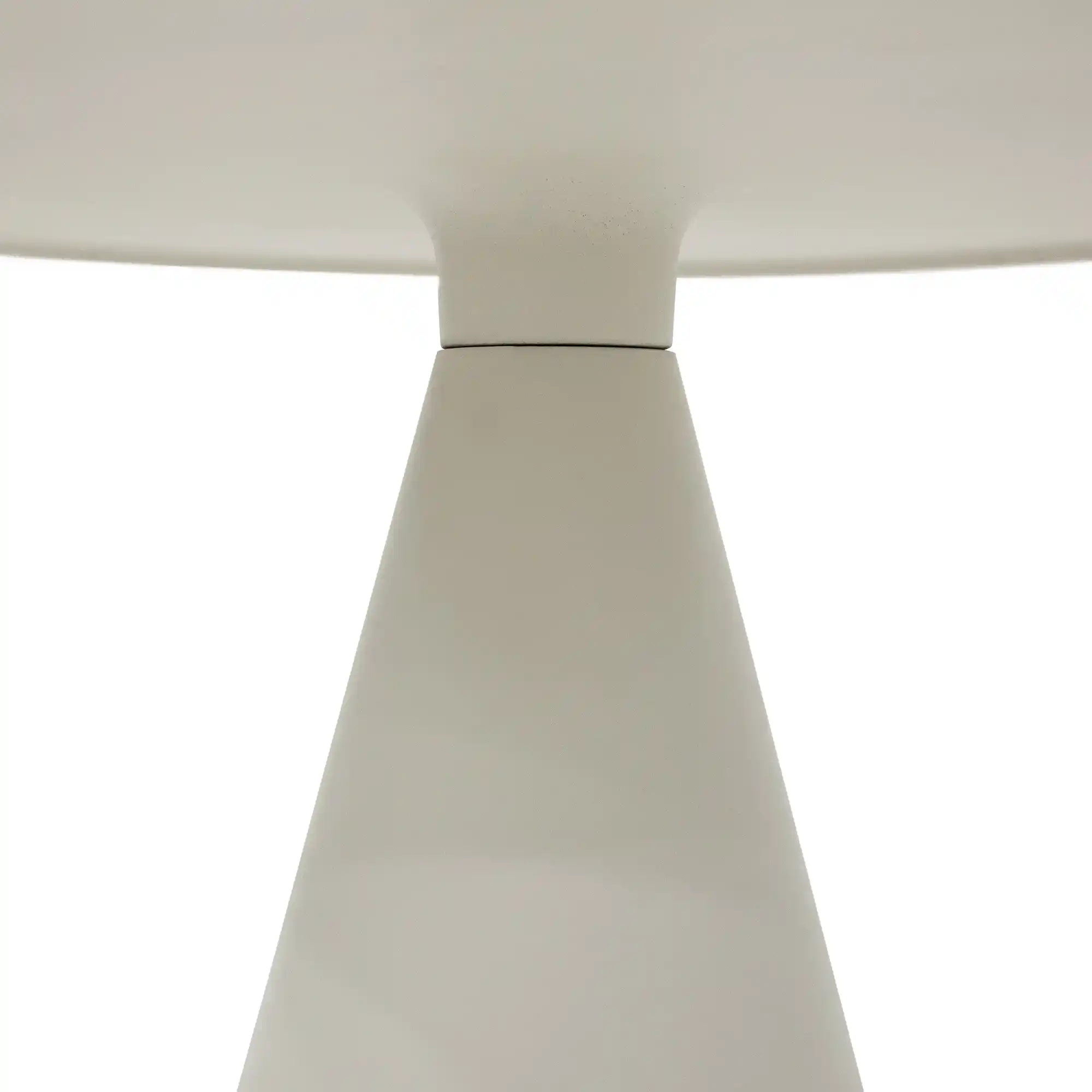
In the short term yes, permanently we advise against it. Below −5 °C the products should be brought indoors if possible; if that is not possible, a cover at least protects the surface. Standing water and repeated freeze-thaw cycles are the causes that lead to cracks.
What has to be considered before covering?
The surface must be completely dry before the cover goes on. If it is covered while damp, moisture accumulates, efflorescence increases and in frost the component can crack. With fire pits, wait after use until the housing has cooled down completely before the protective cover goes over it.
What material may the cover be made of?
The cover must be breathable. Film or plastic tarpaulins are unsuitable, because they trap water inside. The cover should fit tightly so that no rain or snow collects in hollows; the opening at the bottom is additionally tied shut.
How is the gas fire pit winterised?
First close the control knob and the cylinder valve, then let the housing cool down completely and put the protective cover on. Store the fire pit in a cool, dry place, away from children and pets and without direct sun or draughts. The storage temperature must not exceed 50 °C, and during longer periods of non-use, remove the batteries and disconnect the gas connection properly.
How is the ethanol fire pit winterised?
Before a longer break or transport, the remaining fuel must be drained completely – using a suction pump or the drain function of the unit. Keep the fuel in the approved original container and store the unit dry and safe, out of the reach of children and pets.
What else has to be done on the smart version?
Empty the internal tank completely via the drain valve and store the fuel properly. Avoid prolonged dry running of the feed pump, because that considerably shortens its service life. The plastic hoses inside the unit have a service limit of two years and should be replaced on that cycle.
How is the fountain winterised?
Five steps are part of it: bring it indoors if possible; otherwise position it dry and under cover; remove all internal parts (plug, hose, lighting, pump); drain the water completely and remove the drain plug; lift the fountain so that it does not freeze to the ground. The pump can overwinter in the fountain, but then it must be completely dry and packed insulated in a plastic bag with a cloth – storing it separately is better, however.
What should I watch out for when restarting in spring?
First check the basin for frost damage, because a crack explains leaks. Then check the pump, hose and sealing plug, reassemble everything and carry out a leak test before filling with water and connecting the power supply.
Which operating limits apply in winter?
Below 5 °C ambient temperature a gas fire pit does not work reliably, because the gas flow is limited. Another common cause of a low flame is a cylinder with less than 25 % remaining content – changing the cylinder helps here. For fountains: do not operate below 5 °C ambient temperature and do not heat the water above 35 °C; in frost, disconnect the power supply, drain the water and store the unit dry.
| Product | Operating limit |
|---|---|
| Gas fire pit | Ambient temperature above 5 °C |
| Fire pit in general | Wind speed up to 3 m/s |
| Fountain | Ambient above 5 °C, water below 35 °C |
| Storage | dry, cool, maximum 50 °C |
6 What happens next?
That completes the care routine – what applies to warranty, returns and spare parts is described in the FAQ article Warranty and Service. If you are planning the setup before first use, the order of the steps is set out in Setup and Installation. Detailed care instructions for the material are given in the guide Care instructions for GFRC furniture, and choosing before buying is covered in the FAQ Buying Guide: Material, Fire Pit, Furniture, Fountain.
Material, surface and care from the perspective of the material itself are summarised in What are the advantages of GFRC Beton?. All articles in this series are collected in the FAQ section of the guide.