










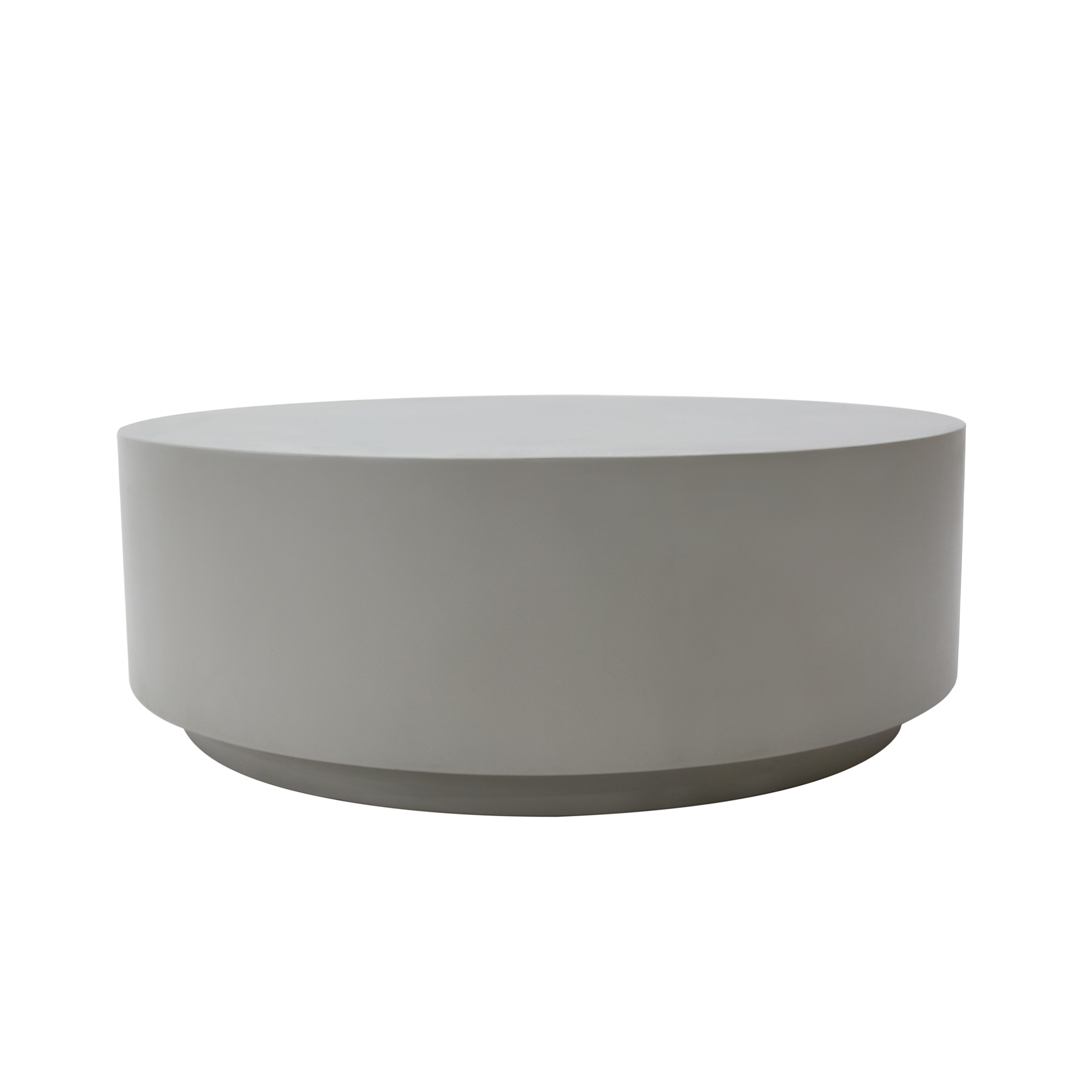
GFRC, fire pit, furniture or fountain – most people who reach the order page are asking themselves the same handful of questions. This GFRC buying guide collects the answers that actually decide a purchase: what the material is made of, how it behaves outdoors, which burner type suits which location, what size a table needs to be and what a fountain has to be connected to. The four topics are more closely linked than they first appear: anyone who knows the location already knows which fire pit will work, and anyone who understands the material can judge size and weight realistically.
The structure therefore follows the order of a real decision. It starts with the material and its surface, then moves to the fire pit, then to furniture and finally to the fountain. At the end you will find the next steps – from shipping and setup to care and warranty – with links to the matching FAQ articles. If you only have one question, you can jump straight to the relevant section.
GFRC: thin-walled, lighter than solid concrete, frost- and UV-resistant.
Gas outdoors only, ethanol indoors and outdoors – automatic models only under cover.
Side table, coffee table, dining table: plan size by people and walking routes.
Dedicated circuit with a residual-current breaker, water level below the pipe height.
If you would like to browse first, these are the matching product areas:
1 What is GFRC – and how is it different from cement?
GFRC stands for glass fiber reinforced concrete. Fine glass fibres are mixed into the concrete matrix, taking over the job a steel reinforcement would normally do: they increase flexural strength and hold cracks together when the component is loaded or heated. The result is a composite that reaches the same stability as conventional concrete at a much thinner wall thickness. For furniture and fire pits this is the decisive point – not only technically, but also for how much weight ends up on your terrace, balcony or floor slab.
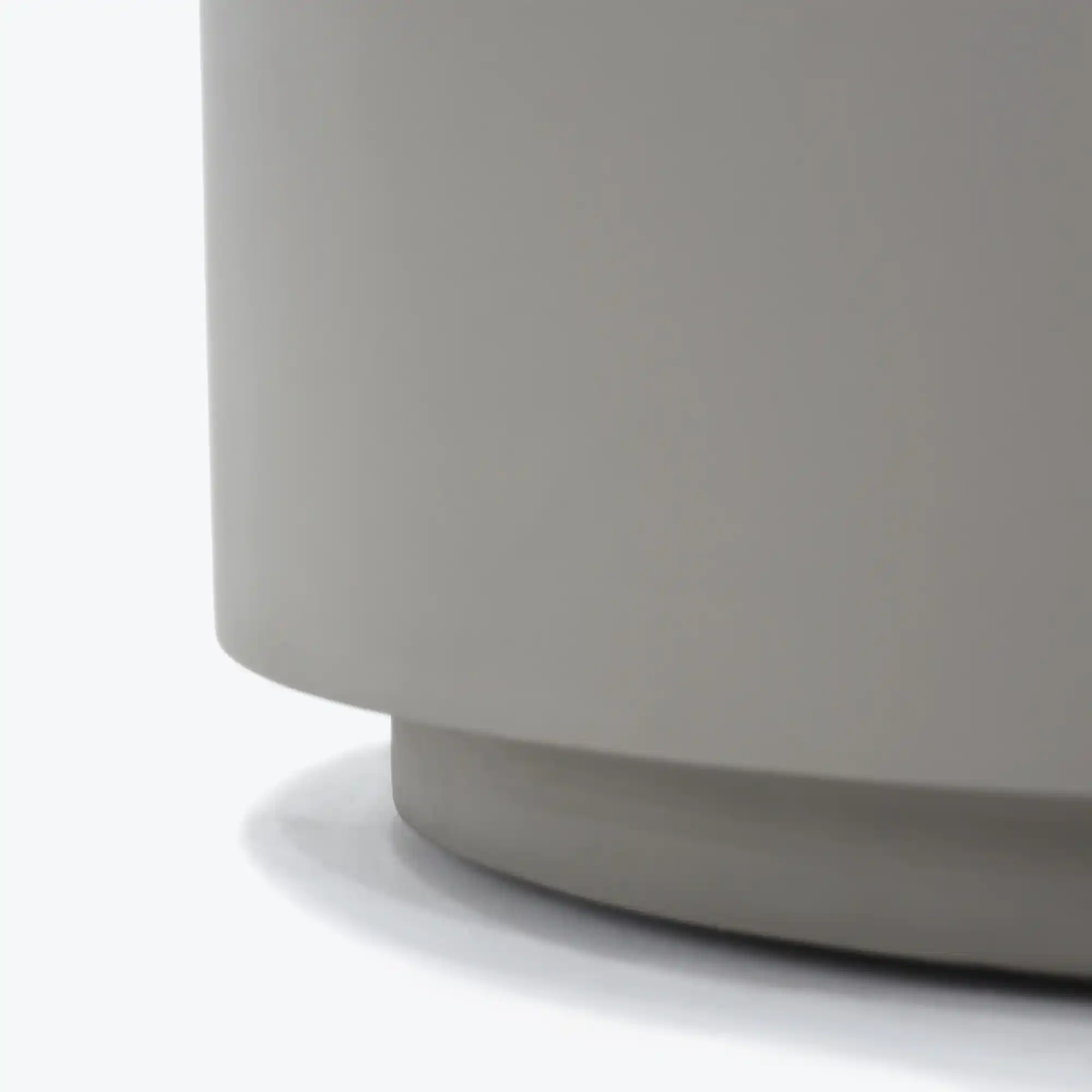
The difference from “cement” lies less in the binder than in the construction. Solid cement concrete is poured in thick cross-sections and is correspondingly heavy. GFRC is cast thin-walled, with internal reinforcing ribs and a wall thickness of 8 mm to 25 mm – about 10 mm on average, reinforced to 30 to 50 mm at corners and edges. The components are hollow, need no additional steel frame and achieve a weight reduction of roughly 60 to 80 percent compared with solid concrete. For a piece of garden furniture, this is the reason a concrete table can be carried by two people at all. If you want to understand the material in principle, the guide Material description: GFRC goes deeper, and What is concrete? explains the basics.
Will I see or feel the glass fibres?
No. The glass fibres are fully enclosed inside the concrete matrix and only act as internal reinforcement against bending. They are not part of the surface finish, so you never come into contact with them in normal use. What you touch is always the sealed concrete surface.
Which concrete class does ELEMENTI use – HPC or UHPC?
The base is a high-grade HPC (high-performance concrete) system, and on the core physical values it matches or exceeds UHPC (ultra-high-performance concrete) standards. Technically it is a polymer-modified GFRC composite developed specifically for outdoor furniture and fire pits. The HPC base uses high-strength aluminate binders and polymer modification for strength, impermeability and weather resistance; the alkali-resistant glass fibre reinforcement pushes flexural strength and thermal shock resistance beyond classic UHPC, without the heat transfer and oxidation problems of steel fibres.
How does GF concrete compare with MgO furniture?
MgO is known for long-term expansion and powdering, poor paint adhesion and high water absorption, and its reaction cycle can continue for more than a year after production – so the material is still reacting when the buyer receives it. GF concrete uses an aluminate system with a dense structure, low water absorption and stable dimensions, and the material reaction is complete before shipping. That removes the risk of a product that keeps changing while you use it.
Does the material fade, yellow or blotch?
No. In UV ageing tests over 95 hours the material reached grey scale grade 4 to 5, with no visible surface difference, and outdoor exposure over 3 to 6 months showed no significant colour change. Iron oxide pigments are added at the powder stage and blended in several passes, so they are evenly distributed in the finished piece. Pronounced patches or clouding do not occur.
What are the physical values of GF concrete?
Density is around 1.7 g/cm³, flexural strength around 16.7 MPa and compressive strength around 42 MPa. Surface hardness is 6 to 8 on the Mohs scale, and water absorption is roughly 3 % when sealed (about 18 % unsealed). The temperature range is −30 °C to 120 °C; with the patented ELEMENTI concrete formulation, special applications reach up to 250 °C.
| Property | Value |
|---|---|
| Density | approx. 1.7 g/cm³ |
| Flexural strength | approx. 16.7 MPa |
| Compressive strength | approx. 42 MPa |
| Surface hardness | Mohs 6–8 |
| Water absorption | approx. 3 % sealed / 18 % unsealed |
| Temperature range | −30 °C to 120 °C (up to 250 °C with special formulation) |
Is the colour part of the material or painted on – and will it flake?
Both processes exist. Solid-colour products are pigmented throughout with iron oxide powder at the powder stage, so the colour is consistent through the body and cannot flake. Wood- and stone-effect finishes are sprayed with a water-based paint about 100 μm thick, with verified adhesion that holds up in normal use; these versions need no additional sealer coat on top.
Will every piece look different?
Yes, there will be natural differences, and that is a characteristic of a handmade material rather than a defect. Within one batch the colour difference is around ΔE 1.0–2.0, between batches around 2.0–3.5. Hand casting and natural mineral raw materials mean the colour and texture distribution of every piece is unique, with the natural mottled look of concrete.
Should I expect pores or fine cracks on the surface?
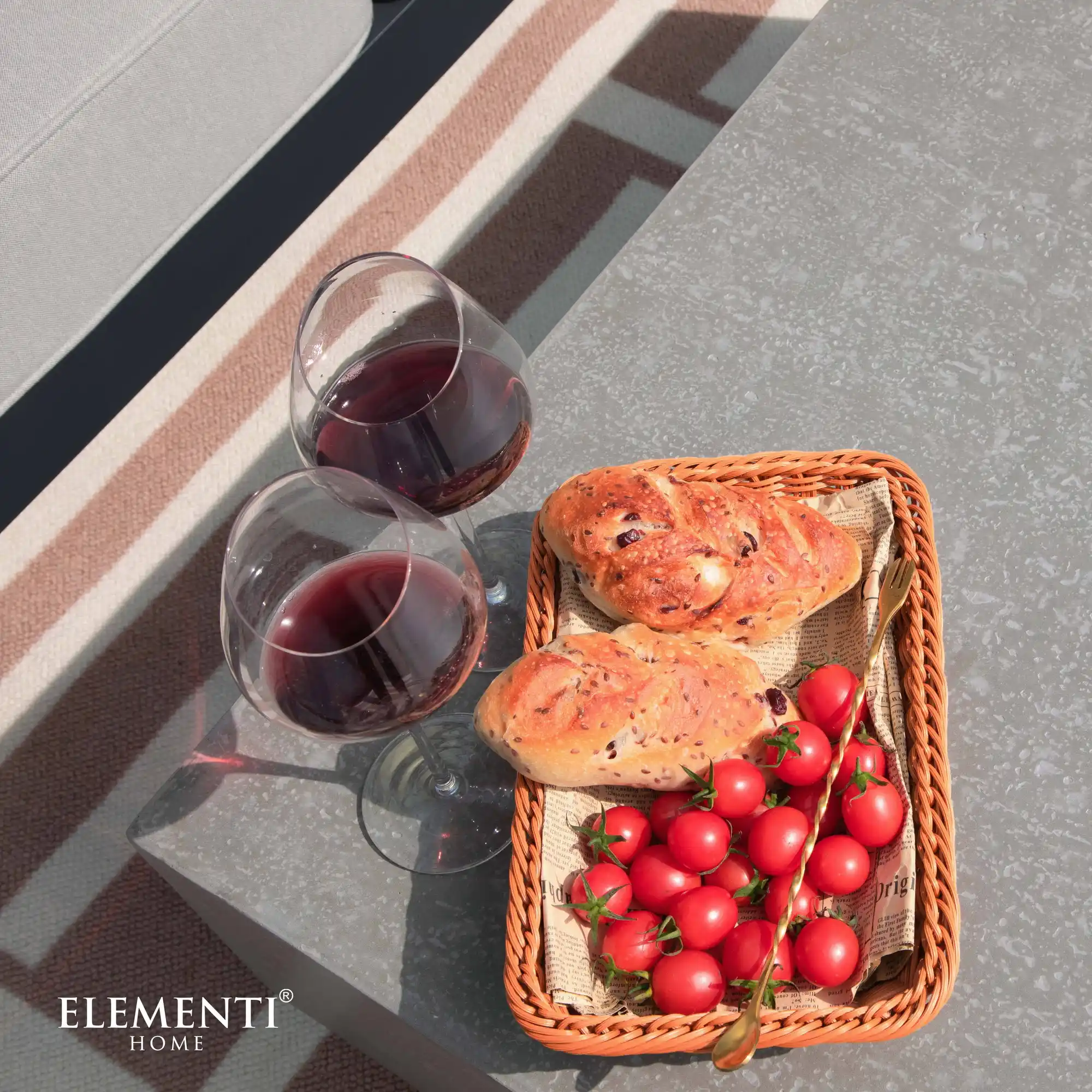
Yes, and they do not affect structural safety or use. Casting can leave tiny surface pores (pinholes), and the natural curing phase can produce non-structural hairline cracks. In handmade GFRC products both are normal and are not manufacturing defects.
Is the surface matt or glossy – and how does it feel?
The overall finish is matt, with a gloss level of 10 to 25 GU. In normal use it feels finely grained; specially treated products offer a more pronounced coarse-sandblasted texture. Areas that are touched frequently are sanded with 320-grit paper, which makes them feel smoother.
What is the sealer layer on the surface – and what does it do?
Different products use different surface systems, mainly a combination of water-based penetrating material plus water-based or solvent-based film-forming material across 3 to 5 passes. Fire pits need heat resistance, so they use a nano water-based coating that repels water and dirt and resists UV and high temperatures. Furniture and fountains add a solvent-based coat on top of the nano coating for additional oil resistance. The top layer cures in 3 to 6 hours and fully cures after 72 hours.
Does the product survive extreme weather outdoors?
Yes. Several key tests cover real outdoor scenarios: 25 freeze-thaw cycles between −25 °C and 50 °C showed no abnormalities, a full week of continuous rain produced no noticeable change, and 96 hours of UV ageing caused no powdering or significant colour shift. A 500 g steel ball dropped from 1 m left only a dent smaller than 2 mm without cracking. The fire pit housing was also burned continuously for 8 hours – above 80 °C throughout, with peaks above 120 °C on the windward side – with no or only minor surface cracks.
Is the product machine-made or handmade?
Semi-handmade. Shaping is done either by semi-mould machine spray casting or full-mould casting, followed by natural curing at room temperature, with roughly 50 % manual involvement across the process. Sanding is done with pneumatic hand tools, and the polishing stage uses no polishing compounds. The guides Furniture made of GF concrete – sustainable innovation for modern design and What are the advantages of GFRC concrete? look at this from the design and material side.
Is the interior solid or hollow – and what carries the load?
The structure is hollow, with reinforcing ribs distributed inside according to size and shape, so no additional steel frame is required. Wall thickness ranges from 8 mm at the thinnest to 25 mm at the thickest, about 10 mm on average, and corners are reinforced to roughly 30 to 50 mm.
Is concrete furniture too heavy for a balcony or terrace?
Weight reduction is exactly where GFRC has its advantage. Glass fibre reinforcement allows thinner components, cutting weight by roughly 60 to 80 % compared with ordinary concrete. Even so, check the actual gross weight of the individual piece before ordering and assess access routes and lift capacity.
2 Which fire pit suits my patio – gas or ethanol?
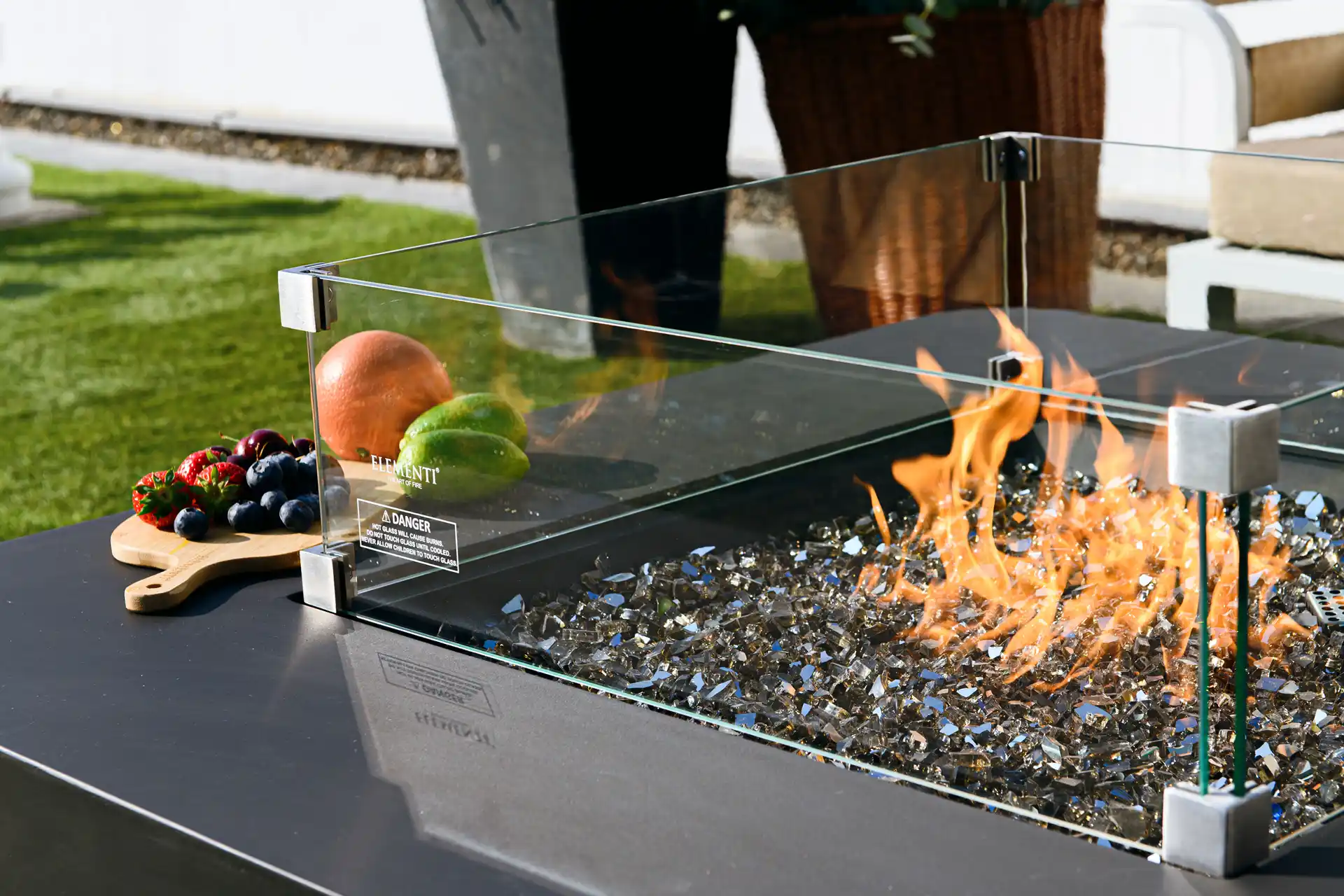
The choice follows from the location, not from taste. A simple test: is the spot permanently outdoors, is a gas supply available and do you want a large flame? Then a gas fire pit is the right choice. Is it used indoors, do you want a decorative flame without smoke or smell, and do you need it to be portable? Then an ethanol fire pit fits better.
| Criteria | Gas fire pit | Ethanol fire pit |
|---|---|---|
| Location | Outdoors only | Indoors and outdoors (automatic models only under cover) |
| Fuel | Propane, butane, LPG or natural gas | Bioethanol with at least 95 % purity |
| Heat output | approx. 11–16 kW depending on model | Decorative flame, ambience rather than heating |
| Supply requirements | Gas cylinder or fixed gas line | None; fuel is poured or pumped in |
| Running cost | Lower per hour | Higher fuel price, no installation cost |
Can a gas fire pit be used indoors?
No. Gas fire pits are approved for outdoor use only; indoor operation is prohibited and genuinely dangerous. This restriction applies regardless of room size, ventilation or the model chosen.
Can an ethanol fire pit be used outdoors?
Yes, but the requirements differ by model. Manual burners work indoors and in fully outdoor settings such as an open terrace or an uncovered garden, because the simple construction is weather-resistant. Automatic (smart) models are designed for indoor use or for covered outdoor areas such as a roofed terrace or gazebo, because the built-in electric pump, sensors and app module must never be exposed to direct rain or heavy moisture – water damage to the electronics is not covered.
Two things are worth checking before ordering. If your plans include an open terrace or garden, choose a manual model. And for indoor use, some countries and cities limit the power and room volume of flueless fires; a high-output burner may legally require a chimney or specific ventilation, so confirm the output and local indoor safety rules first.
How do the flames differ?
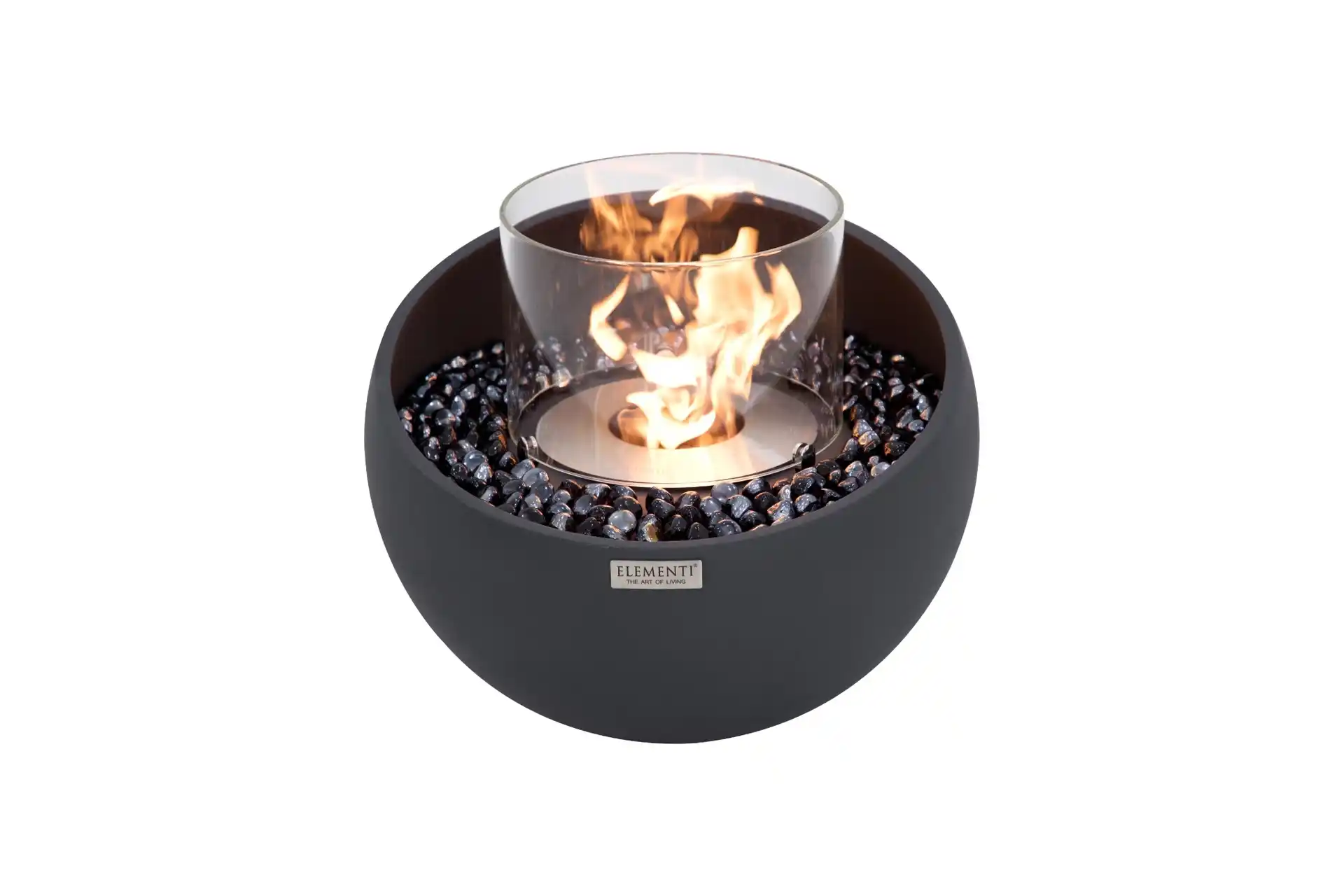
A gas fire pit delivers a large, stable flame that can be adjusted continuously with the control knob and reads as a strong visual focal point. An ethanol burner produces a real, softer open flame that leans towards ambient lighting; on manual models the flame level is set with metal plates or a metal ring.
What fuel does a gas fire pit use?
Propane, butane, LPG or natural gas, with a rated heat input of roughly 11 to 16 kW depending on the model. Depending on the destination country, the gas type and pressure are G30/G31 at 30 mbar, G30/G31 at 50 mbar, G30 at 28–30 mbar plus G31 at 37 mbar, or G20 natural gas at 20 mbar. The rating plate on the product always takes precedence.
What fuel does an ethanol fire pit use?
Only bioethanol with a purity of at least 95 %. Ethanol below that purity is not permitted, and neither are methanol, petrol, kerosene or other substitutes – methanol carries a poisoning risk, and the wrong fuel damages the device directly and voids the warranty.
Which type costs more to run?
A gas fire pit is cheaper to run. An ethanol fire pit costs less to buy and install, needs no gas supply and can be moved at any time, but the fuel price per litre is usually higher. Working out the annual hours of use makes the comparison straightforward.
What does the smart ethanol model add?
The automatic version includes an electric fuel pump, a digital display, a remote control and app support. Functions cover one-touch ignition and shut-off, automatic fuel filling, flame air control, four levels of fire crackle sound, a shut-off timer and a child lock. A manual model is filled by hand and lit with an ignition rod.
What does a smart ethanol burner require on site?
It needs a 220–240 V socket mounted inside the housing. The unit must also stand level: a tilt of 3° or more triggers an alarm and stops operation. Around the unit, keep the area clear and never cover the ventilation openings.
What clearances does a gas fire pit need?
Keep at least 1.2 m from any combustible material, and ideally at least 3 m from combustible structures such as a house, wooden shed or timber fence. Do not install it under a roof covering or near overhanging trees, and keep the gas cylinder at least 1.5 m away from the fire pit. The table height should be between 36 and 110 cm.
What kind of base structure does a gas fire pit need?
The base must be made of heat-resistant material, with fire bricks recommended for the inner wall and brick, stone, concrete block or heat-resistant coating for the outer wall. Combustible materials are not permitted, and neither are non-absorbent materials that trap water – pea gravel, river stones or dense concrete blocks – because trapped steam can cause them to burst. The ventilation openings in the product must always remain clear.
What are the metal parts made of – will they rust?
Main components are SS304 stainless steel, the valve body is brass, and the cylinder holder on models with a built-in cylinder is powder-coated iron. Visible stainless surfaces are brushed, coated parts are powder-coated. Salt spray testing runs 72 hours at 5 % saline, roughly equivalent to three years outdoors – but near the coast, corrosion progresses noticeably faster and inspection intervals should be shortened.
The guides Choosing a fire table – the ultimate guide to size, shape and safety and Understanding gas fire pits: how they work, benefits and how to choose go deeper into sizing and technology. For operation and safety distances, see Safe use of fire pits on patios.
3 Choosing furniture: side table, coffee table, dining table
Sizing furniture is a matter of route planning rather than taste. Start with the intended use, add the number of people who move through the space, and finish with the clearance that has to remain free. The three table types are planned differently.
How do I choose the right table size?
Work in three steps: purpose, foot traffic, free space. A side table sits next to a sofa or serves one person, so the height difference to the seat is what matters most. For a coffee table, leave a walkway of at least 40 cm between the sofa and the TV wall. For a dining table allow about 60 cm of table edge per person and keep roughly 75 cm of clearance behind a pulled-out chair.
Is ELEMENTI furniture suitable for outdoor use?
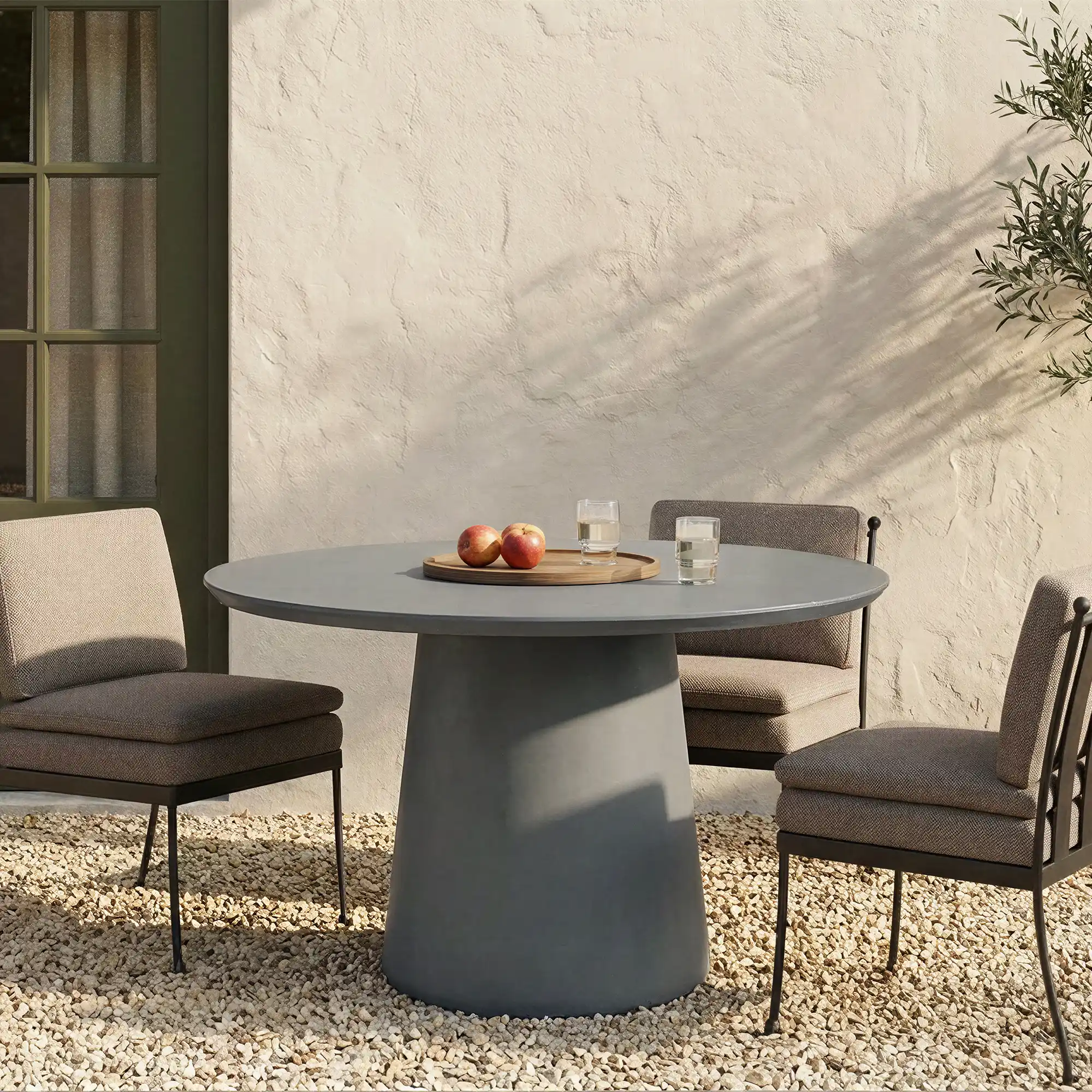
Yes. GFRC is insensitive to frost, UV and moisture and is designed for long-term outdoor use – 25 freeze-thaw cycles between −25 °C and 50 °C and a week of continuous rain both produced no abnormalities. Two conditions still apply: protect the surface during long storage, and in hard winter frost move the pieces indoors or cover them.
Can coffee tables and side tables be mixed within one series?
Yes. The range keeps a consistent language of proportions and surface finishes, so different sizes can be combined freely. For a stronger overall look, choose the same surface treatment and the same colour family.
Concrete dining table or porcelain – which should I choose?
It comes down to how you use the table. If you want the natural texture of concrete, organic shapes and a surface that gains character with time, choose GF concrete. If you want maximum stain resistance, a surface you can cut food on directly, resistance to hot cookware and no discolouration, choose porcelain. Porcelain absorbs almost no water, resists stains better than most natural stone and contains no resin, so it does not yellow outdoors.
What textures and colours are available?
The range covers matt, sandstone, travertine, limestone, marble-effect and wood-effect surfaces, in natural through-coloured and painted colourways. Additional processes such as sanding, sandblasting or chemical treatment can differentiate the material appearance further. For the interior side of the decision, the guide Beton coffee table – beautiful, robust and timeless is a good starting point.
Is the surface texture different on every piece?
The moulded texture is identical on every piece; the texture created by sanding is random. This means the final combination of textures differs from one piece to the next, producing the natural mottled appearance typical of concrete.
Are the table edges sharp – and can corners chip?
Edges are chamfered with an R3–R5 radius, which significantly reduces the risk of chipping; minor knocks will not break a corner off. If a small chip does appear after long use, it can be repaired by applying the supplied repair liquid evenly.
How heavy is a table – and what should I check for access?
GFRC reduces weight by roughly 50 to 80 % compared with ordinary concrete, but as concrete furniture it is still heavy. Confirm the gross weight of the individual piece before ordering, and check the entry door width, corridor corners, lift cabin dimensions and load capacity. The guide What is concrete furniture and why should you choose it? and the overview Concrete furniture – materials, advantages and possible applications cover materials and applications in more depth.
4 Choosing a fountain: power, water and placement
A fountain is a water feature with an electrical appliance inside it, so the planning questions are different from those for furniture. Three things have to be settled in advance: the power supply, the placement, and how the water circuit will be maintained.

Does a fountain need a dedicated circuit?
Yes. The supply circuit must have a residual-current device (GFCI/RCD) installed. It is also worth forming a drip loop at the socket – looping the cable downwards below the socket – so that water running along the cable cannot enter the outlet.
Where can a fountain be placed – and what are its temperature limits?
Place it on a level, load-bearing surface. The operating ambient temperature must not fall below 5 °C, and the water temperature should not exceed 35 °C. During long periods of non-use or freezing weather, disconnect the power, drain the water and store the unit in a dry place. A fountain and a fire pit side by side make an excellent pairing, because water and fire create a contrast of movement and stillness, warmth and coolness, and help to zone a garden or patio.
How much water does the fountain need?
Fill it until the pump remains fully submerged once the circuit is running and the water stays clear. Do not exceed the height of the pipe inside the basin – when the water level is too high it overflows and the fountain appears to leak.
Can the water flow be adjusted?
Yes. The pump has a flow control knob: turning it towards the closed position reduces the flow, turning it towards the open position increases it. This lets you match the water pattern to the surroundings, from a quiet trickle to a clearly visible jet.
Is one filling enough for long-term use?
No. Water evaporates, and without changes algae will form over time. Check the water level regularly, change the water at intervals and make sure the pump always stays fully submerged – dry running is the most common cause of pump damage. Clean the pump every 2 to 3 months with soapy water or a vinegar-water mix and a small soft brush, and for the general cleaning routine see Care instructions for GFRC furniture.
Which garden size suits a fountain?
A fountain works as a calm visual anchor. Plan roughly 1 to 1.5 m of space around it for viewing and circulation; the right size depends on the plot size and the typical viewing distance. A certain amount of light splashing is normal, so keep unpainted wooden furniture, electronic devices and other water-sensitive items out of a 0.5 m radius.
5 What happens after the decision?
Once material, fire pit, table size and fountain location are settled, the organisational part begins. The FAQ article Shipping and Delivery explains which products travel by parcel service and which by freight forwarder, why delivery is curbside, and what to do on the day of arrival. How fire pits, fountains and furniture are assembled is described in Setup and Installation. For cleaning, stain removal, resealing and winter storage there is Care and Winter Storage, and which claims are covered and how spare parts are ordered is set out in Warranty and Service and in the article How does the Elementi guarantee work?.
All questions and answers in this series are collected in the FAQ section of the guide. If you still want to check floor area, dimensions or weight before ordering, the guide Beton side table – top 5 & buying advice offers practical comparisons and planning notes.