








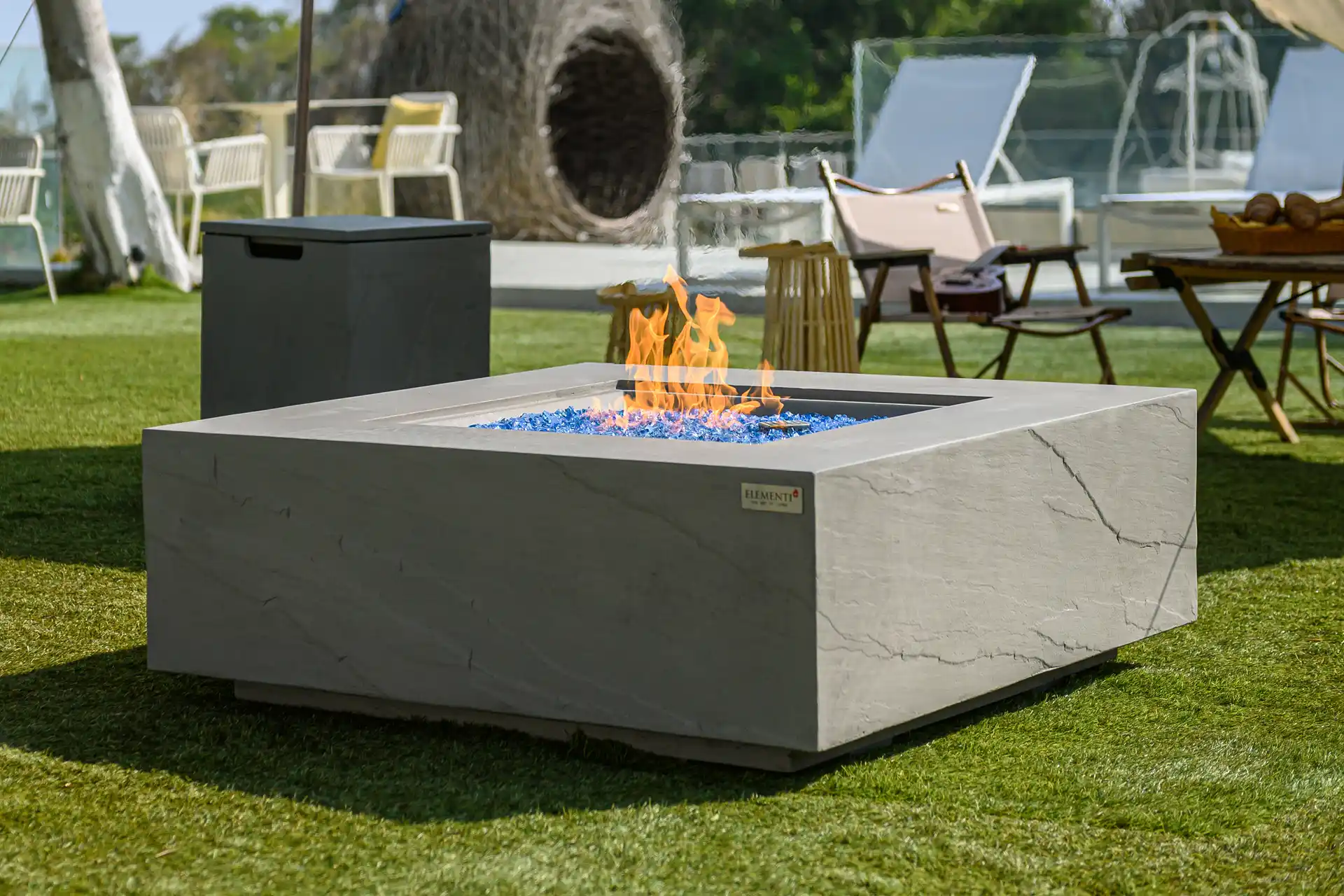
A fire table is more than just a table with fire – it is a meeting point, a design statement and a source of real warmth. It combines lively flames with modern functionality and creates a special atmosphere in any garden or on any terrace. While electric heaters often feel purely functional, a fire table brings ambience, character and a place where people naturally come together.
If you are looking for inspiration, you will find a selection of high-quality fire pits for gardens and terraces here.
1 What is a fire table?
A fire table is a table with an integrated burner that can be operated with gas, ethanol or wood. Unlike a classic fire pit, the burner is usually concealed inside the table body, leaving only the flame visible. Many models feature protective glass or metal frames to increase safety while highlighting the design. This makes a fire table a perfect combination of function, comfort and aesthetics – ideal for terraces, lounges and stylish outdoor spaces.
2 Advantages of a fire table
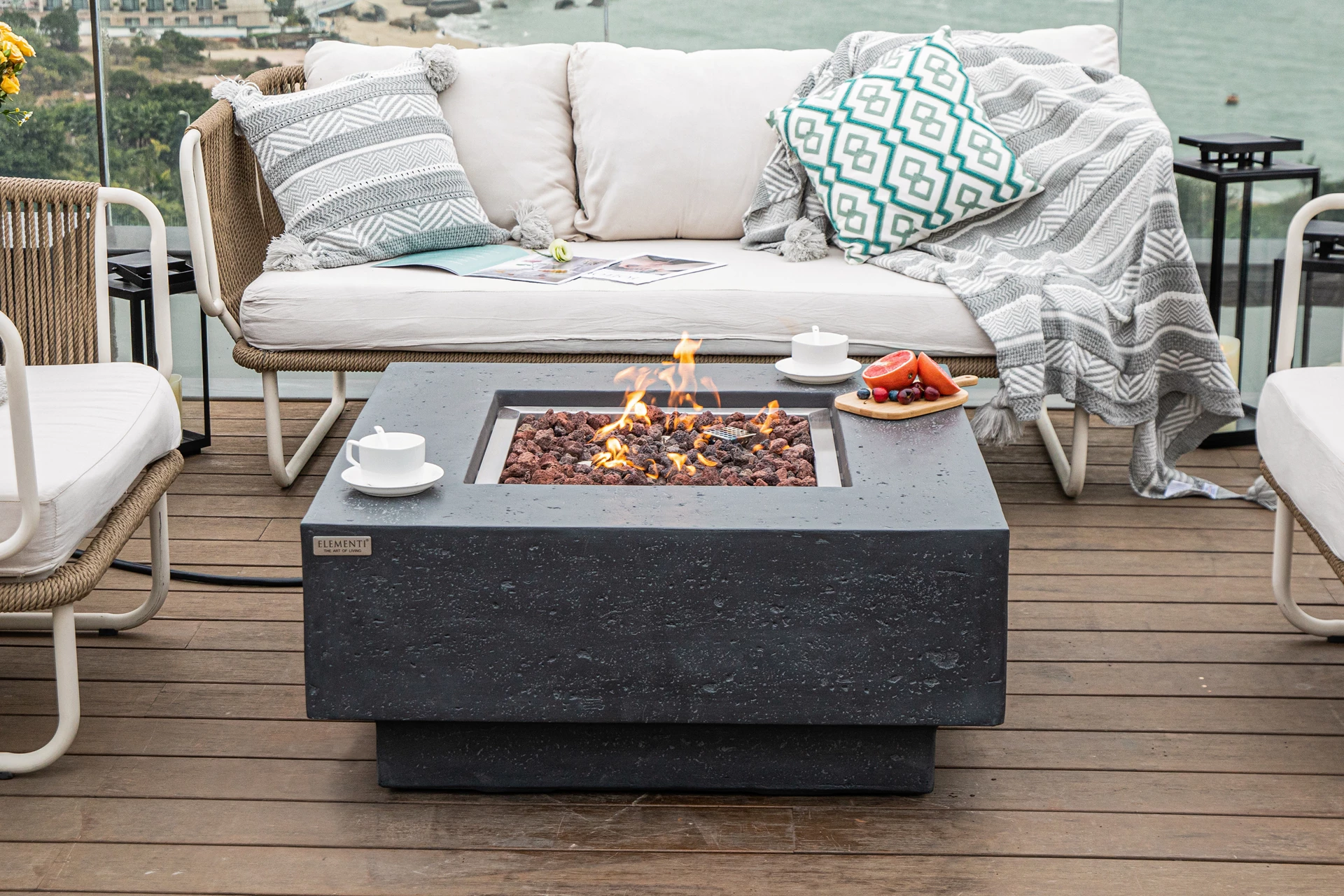
The biggest difference compared to conventional heat sources lies in the experience: a fire table does not only provide warmth, but real light, movement and emotion. The natural flames have a calming effect and create an atmosphere no electric heater can replicate. Instead of a purely technical heat source, a living centre is created – a place where people gather, talk and linger.
A fire table is both functional and emotionally appealing. It works perfectly as the centrepiece of a seating area or lounge corner while also serving as a table surface for drinks, snacks or décor. Whereas a classic fire pit is often mainly decorative, a fire table combines modern design with practical use. It delivers warmth, light and sociability in one element.
- Real flames instead of artificial heat sources
- Cosy, natural atmosphere – ideal for family and friends
- Functional: table and heat source in one
- Extends the outdoor season in spring, autumn and winter
- Design object that becomes the focal point of any terrace
Especially as outdoor living continues to gain importance, the fire table truly shows its strengths: it does not simply replace a patio heater – it creates an atmosphere that connects people. Whether as the centre of a family evening, a stylish addition to dinner or a calm fire source for relaxing hours, the fire table stands for warmth with soul.
Especially on the terrace a fire table unfolds its full effect as a social focal point.
3 Types of fire tables
3.1 Gas fire tables
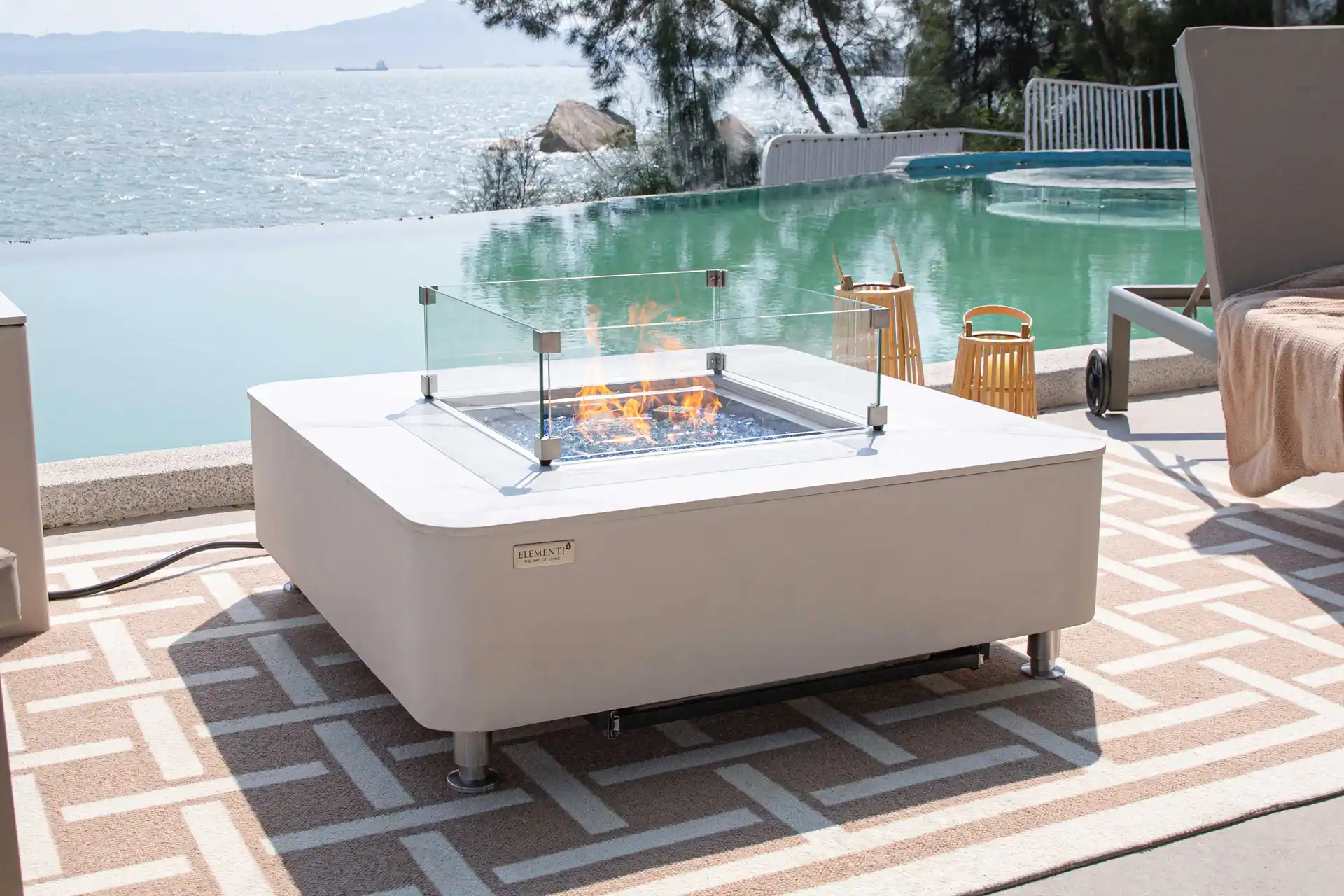
Gas models are extremely popular – and for good reason. With the push of a button, the fire ignites instantly, the flame height can be conveniently adjusted, and combustion is clean, almost odourless and requires minimal maintenance. This makes gas fire tables especially suitable for design-oriented outdoor spaces with frequent use.
Compared to classic wood-burning fire pits, gas fire tables stand out for their speed, cleanliness and control. While wood requires lighting, warming up, ember formation and ash removal, a gas solution starts immediately and produces an even flame right away. This makes them ideal for terraces, lounges or hospitality outdoor areas where comfort and aesthetics are key.
If you would like to explore the pros and cons of gas versus wood in more detail, you can find further information in our in-depth guide “Gas vs wood fire pit – comparison”.
- Ready for use instantly – no lengthy lighting process
- Even, controllable flame height
- No ash or residue – less cleaning effort
- Modern look, ideal for concrete, metal or designer furniture
That said, there are still important points to consider with gas fire tables. A gas connection or, for mobile versions, a propane cylinder is required. Safety and maintenance measures are essential: regularly check the burner, ensure proper ventilation and keep a safe distance from flammable materials. Nevertheless, the gas fire table remains an attractive choice if you want an immediate fire effect with minimal effort.
When choosing the right fuel, it is worth taking a closer look at the differences between propane and natural gas. Both options have their own advantages and disadvantages in terms of performance, handling and installation. You can find detailed information in our article “Propane vs natural gas fire pits – which fuel is better?”.
3.2 Ethanol fire tables
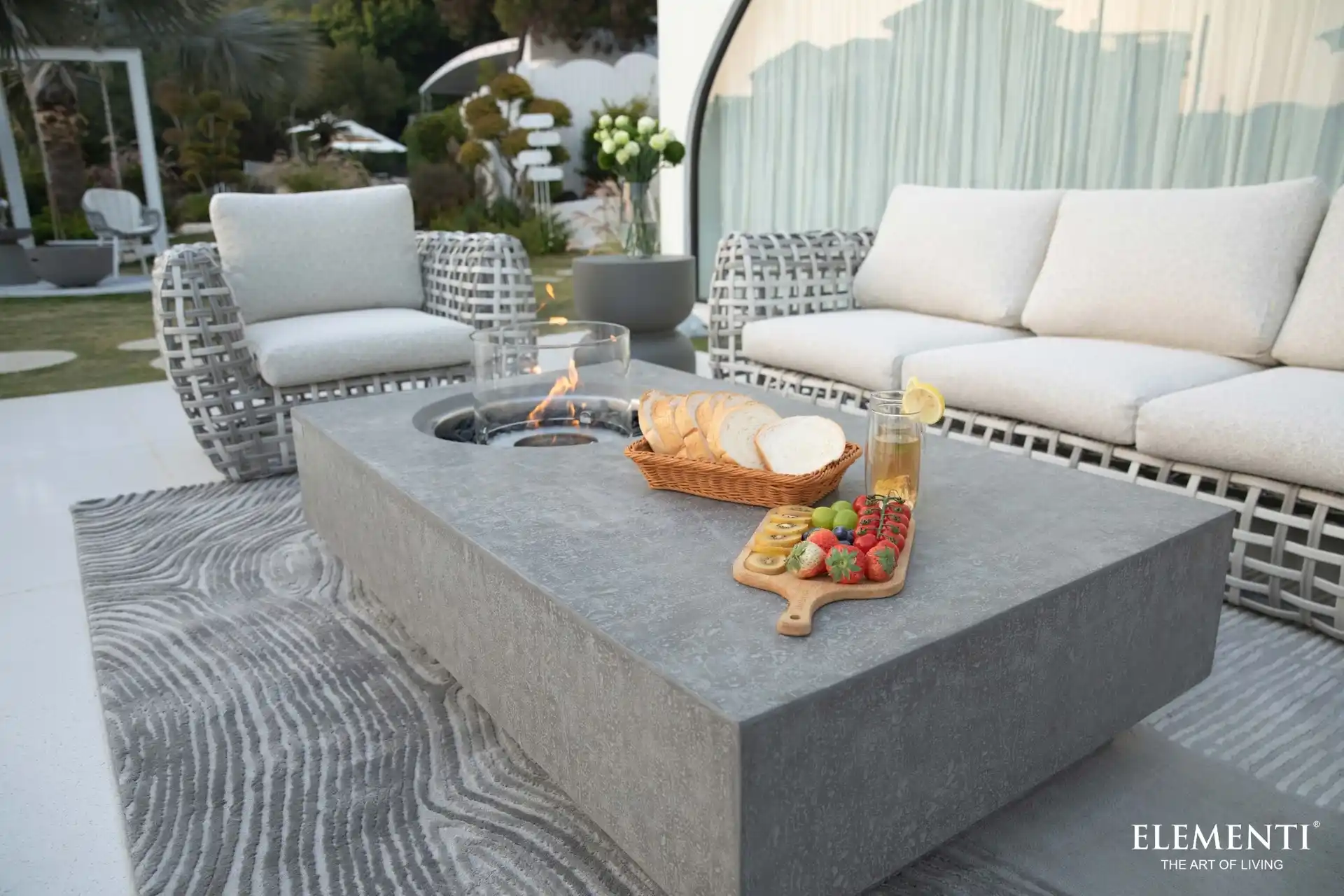
This option requires no gas connection and very little maintenance. Ethanol burns almost residue-free and is suitable even for smaller balconies or covered terraces. The flame is smaller, but particularly elegant.
3.3 Wood-burning fire tables
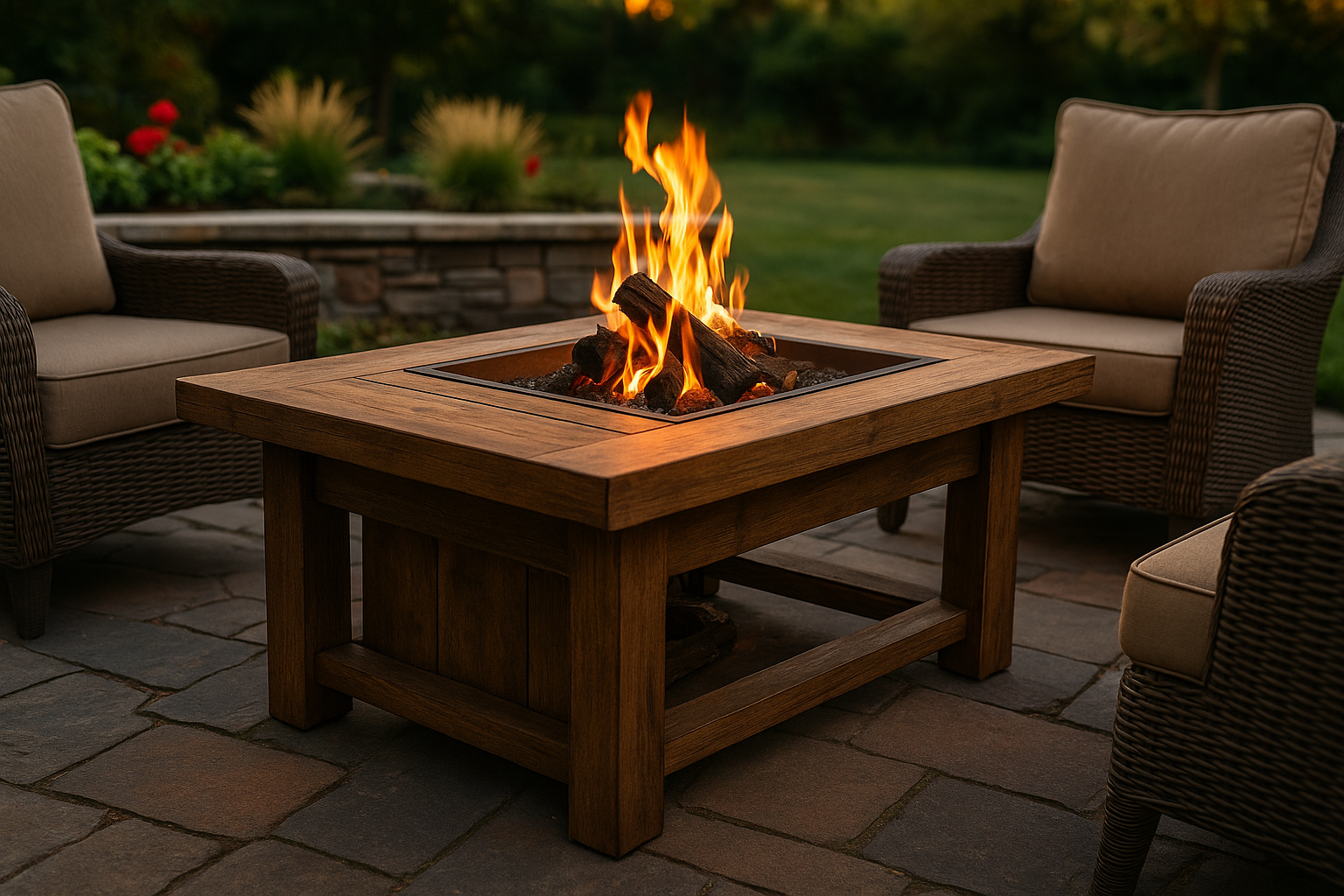
Wood-burning fire tables represent the most original form of outdoor fire. For those who love the crackling sound of wood, the scent of a campfire and the irregular movement of the flames, a wood-burning fire table is the perfect choice. Unlike gas or ethanol models, they create a particularly lively fire experience: flames dance, embers glow and the spectacle invites you to linger.
At the same time, wood-burning fire tables come with higher requirements. Special attention must be paid to selecting and storing the wood (dry, clean and suitable), as well as ensuring sufficient ventilation and distance from flammable materials. One of the most important aspects is ash handling: after each use, ash and embers remain and must be disposed of or reused properly. Helpful tips can be found in our guide “What to do with fire pit ash and its uses”.
Advantages at a glance:
- Real wood fire with atmosphere and visual appeal
- Crackling sound, warmth and scent create a cosy outdoor mood
Disadvantages at a glance:
- More maintenance: cleaning after each use, monitoring embers and residue
- Ash and soot that must be handled properly
- Weather- and material-dependent: wood models require weather-resistant materials and possibly a cover in winter
4 Materials for fire tables
The choice of material affects both appearance and durability. Modern versions made of GFRC concrete (glass-fibre-reinforced concrete) are particularly popular thanks to their stone-like appearance and robustness. Concrete looks solid and high-quality while remaining surprisingly weather-resistant. Stainless steel offers a sleek, glossy surface, while aluminium stays lightweight and mobile. Those who prefer a natural look can opt for wood cladding or marble-style designs that add an elegant touch to the fire table.
- GFRC concrete: durable, weather-resistant and architecturally modern
- Stainless steel: easy to maintain, rust-free, ideal for timeless design
- Aluminium: lightweight and durable – ideal for mobile furniture
- Wood / marble: natural, elegant, with a warm character
You can find a direct material comparison here: Concrete vs stainless steel fire pits .
5 Correct placement and safety
A fire table should be placed on a solid, fire-resistant and level surface. Ensure sufficient distance from flammable materials such as cushions or plants. Most models are designed for outdoor use but can also be used in covered areas, provided there is adequate ventilation.
“Safety is not the opposite of design – a well-placed fire table is always both stylish and safe.”
Only use the fuel specified by the manufacturer. Regularly check connections on gas and ethanol models. Never leave the fire unattended, and keep a fire extinguisher or a bucket of sand nearby.
6 Design and atmosphere
Fire tables are now more than heating elements – they are part of modern garden design. Minimalist shapes with a concrete look harmonise with contemporary lounge furniture, while round models with stone accents convey a Mediterranean lightness. Combined with wooden seating, cushions and outdoor rugs, a harmonious overall look is created.
A fire table quickly becomes the heart of the garden: the centre where conversations begin, glasses clink and evenings are extended. It combines the functionality of a table with the emotional power of fire – a combination few other pieces of furniture can match.
7 Care and longevity
Caring for a fire table is simple but important. Remove ash or fuel residues after each use and clean glass covers regularly with a mild cleaner. Use a suitable cover when not in use to protect the material from rain and UV radiation. Concrete or stainless steel models will retain their value and appearance for many years.
- Remove ash and dirt after cooling down
- Regularly check the burner for residue
- Use a protective cover when not in use
- Do not use aggressive cleaning agents
8 Fire tables in winter – warmth with style
Even in winter, a fire table reveals its special appeal. With blankets, throws and hot drinks, the terrace becomes a cosy retreat. Fire reflects on snow, flames dance in the cold light – creating a sense of calm and luxury at the same time. Gas and ethanol models operate reliably even at low temperatures, making them perfect companions for year-round outdoor living.
9 Fire table as a functional design object
A fire table uniquely combines design, comfort and emotion. It provides warmth, creates atmosphere and invites people to gather – far beyond summer. Unlike conventional heaters, it offers real fire that brings people together. Anyone who values style, functionality and a distinctive ambience will find the fire table to be the perfect element for garden, terrace or patio. It is not just a piece of furniture, but an experience – a place where fire and community merge.
Further inspiration can be found in our overview of fire tables for gardens and terraces.