








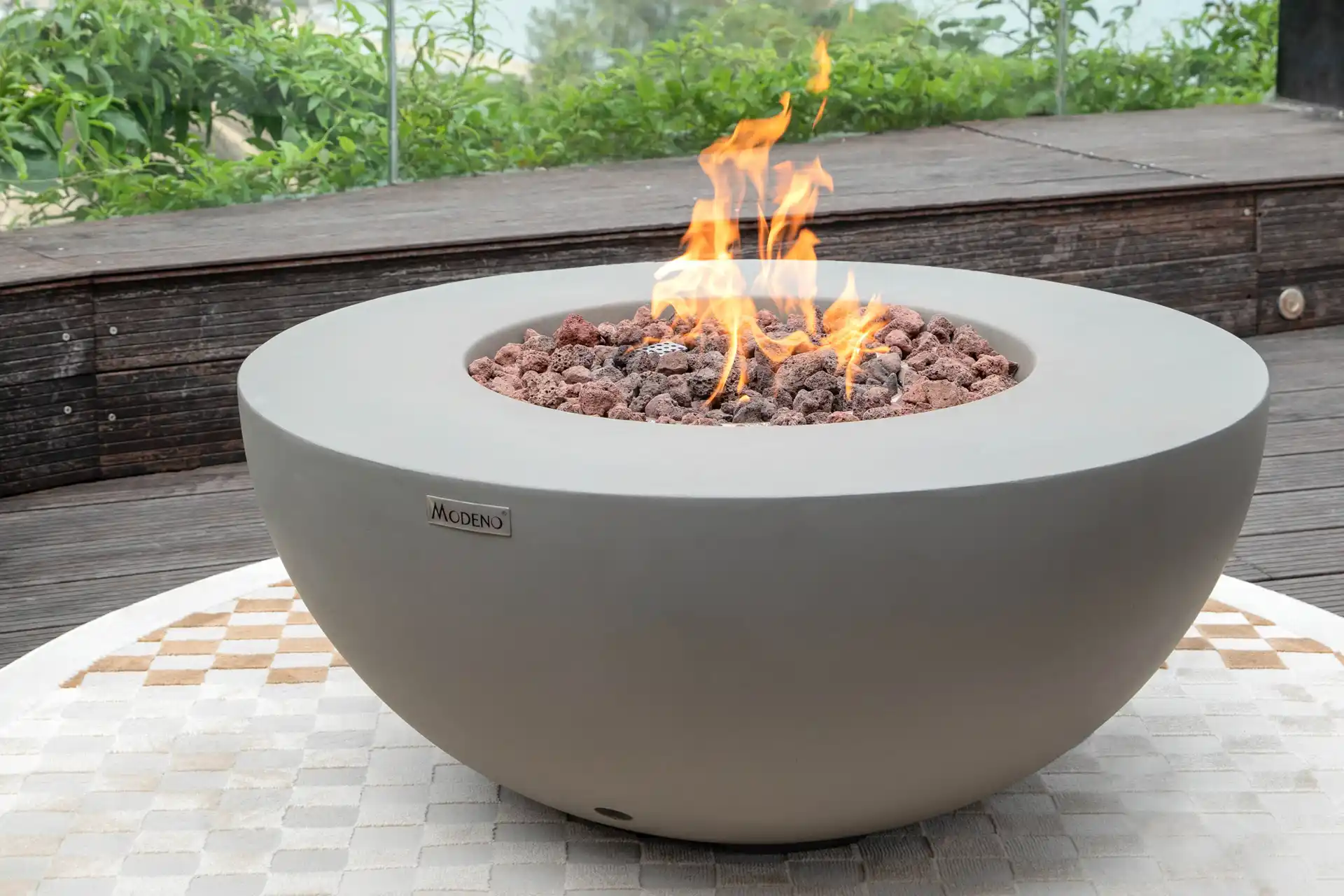
Outdoor gas fire pits are exposed to extreme conditions: open flames, rapid temperature fluctuations, moisture, rain, snow and long-term UV radiation. Although many materials look similar from the outside, their internal structure and durability can differ considerably.
This article compares two commonly used materials for fire pits: GFRC (Glass Fiber Reinforced Concrete) and MgO (Magnesium Oxide Board).
Based on professional test data and real customer feedback, the differences become clear. The following comparison is intended to help customers, planners and dealers understand which material performs better in real outdoor use.
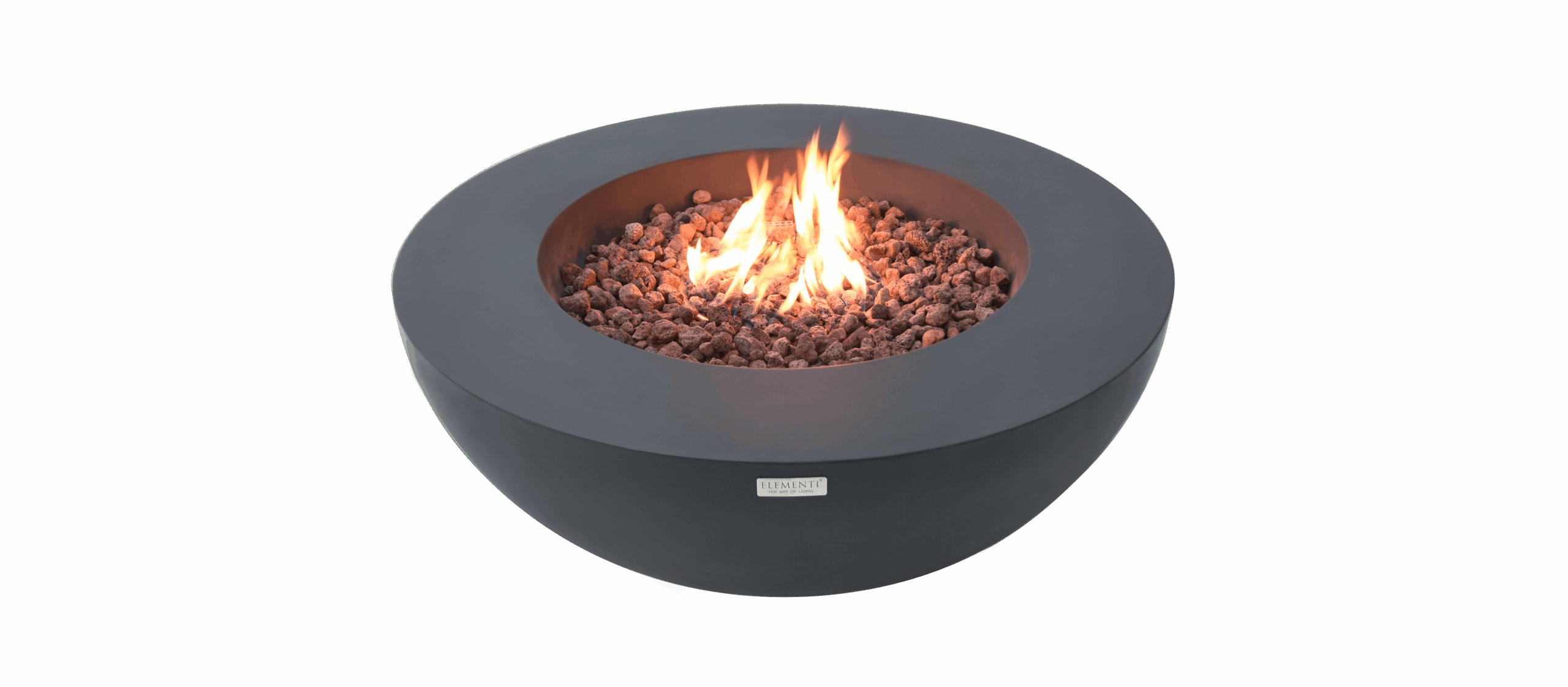
1 Material & Technology
1.1 GFRC
GFRC is a composite material made of cement, sand, glass fibers and polymer additives.
If GFRC is produced using the spray-up process, the following properties are created:
- A one-piece, monolithic component
- High density, high strength, good impact strength
- Resistant to high temperatures and thermal cycles
- Suitable for long-term outdoor use
Due to this durability, GFRC is widely used in architecture, landscaping and high-quality gas fire pits.
1.2 MgO
MgO sheets are mixed from magnesium oxide powder, magnesium chloride, fibers and fillers and pressed into flat sheets. MgO is inexpensive and lightweight, but was originally developed as a construction panel – not as a load-bearing component and not for high continuous temperatures.
fire pits made of MgO are usually based on a box structure made of panels, which creates several weak points:
- Connection joints between the panels
- Surface coatings instead of continuous material
- Lower impact resistance
- Lower thermal stability
| GFRC | MgO |
|---|---|
|
|
|
|
2 Real customer feedback on MgO fire pits
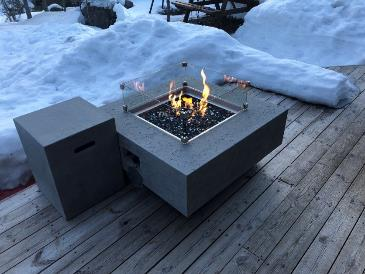
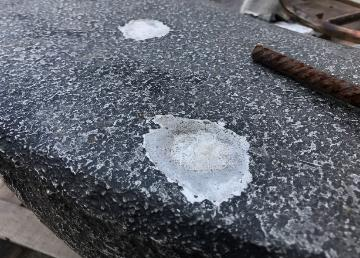
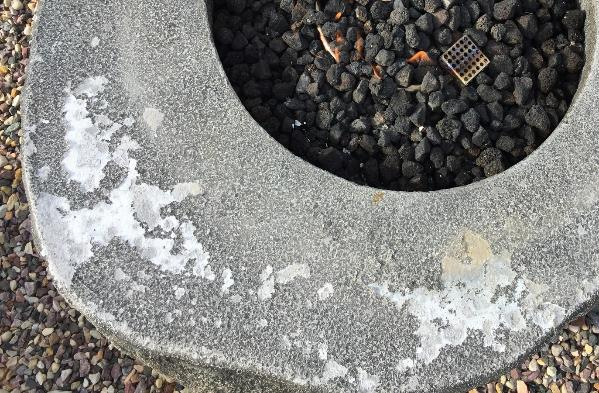
Although MgO panels offer certain advantages in terms of lower costs, lower weight and ease of processing, customer feedback consistently shows that the material falls well short of expectations when used outdoors for fire pits. Many users report that the surface coating begins to flake or flake off after a short time outdoors – especially after repeated heating and cooling cycles – and visible damage occurs to the outer surface (see Fig. 1).
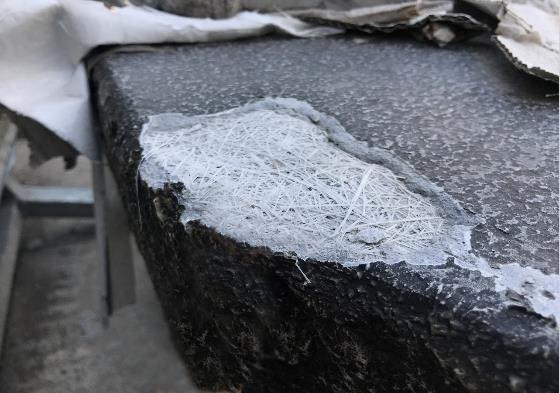
As MgO has a natural tendency to absorb moisture, customers in humid or rainy regions often observe swelling, deformation or opening of the joints between the tiles over time. These problems are exacerbated in colder climates: The absorbed moisture freezes in winter, expands and can cause cracks, internal damage or even partial structural failure. In several cases, it has been reported that the glass fiber layer used inside the MgO panels, which is intended to provide minimal reinforcement, fails under these conditions, causing the body to become brittle and significantly weakened (see Fig. 2).
Some users also report that the edges of MgO fire pits are easily damaged when they are moved or even slightly knocked, which underlines the low impact resistance of the material. Overall, even though MgO can generally function as an interior construction panel, its poor performance under the influence of weather, moisture and direct exposure to flames means that many customers classify MgO fire pits as unsuitable for long-term outdoor use.
In a direct comparison, GFRC thus shows a clearly superior material performance compared to MgO under long-term outdoor conditions.
3 Frequently asked questions about GFRC and MgO fire pits
Which fire pit lasts longer outdoors – GFRC or MgO?
GFRC fire pits generally have a significantly longer service life. The material is dense, glass fiber reinforced and does not react with water – it retains its shape even in rain, sun and temperature fluctuations.
MgO, on the other hand, absorbs moisture. Over time, this can lead to swelling, cracks, delamination of the layers and flaking. GFRC is therefore the more reliable choice for long-term outdoor use.
Why does the surface of a MgO fire pit crack or flake off after a while?
MgO is not naturally weather-resistant and absorbs moisture. In order for the material to be used outdoors at all , the surface is protected with a layer of paint or coating.
If this coating is slowly degraded by heat, UV radiation or rain, water penetrates the MgO, reacts with the material and also damages the embedded glass fibers. This results in flaking, blistering and visible damage to the surface.
Is GFRC heavier than MgO and can a GFRC fire pit still be moved easily?
GFRC is denser and mechanically more stable than MgO, which is why a GFRC fire pit initially appears more solid. However, modern GFRC constructions are designed in such a way that wall thicknesses are optimized and cavities are used sensibly.
In practice, this means that the fire pit is heavy enough to stand securely and storm-proof, but can usually be moved to another location by two people at – without compromising its stability.
Can I use a MgO fire pit in regions with frost or high humidity?
In regions with high humidity or frost, a MgO fire pit is only recommended to a limited extent. The material can absorb water; when it freezes, the moisture inside expands and causes tension.
Typical consequences are cracks, swelling, deformation or the opening of joints. In damp or cold climate zones , a GFRC fire pit is therefore much more robust and the safer solution in the long term.
Does a GFRC fire pit require special care or protection?
GFRC (GF concrete, glass fiber reinforced Beton) is very easy to maintain. The material absorbs practically no water, requires no additional protective coating and is resistant to normal weather conditions.
For cleaning, it is usually sufficient to wipe the surface occasionally with a soft cloth and mild soapy water . Extensive maintenance is not necessary as long as the fire pit is used properly.
Why are GFRC fire pits more expensive than MgO models?
GFRC requires high-quality raw materials and a more complex manufacturing process. Glass fibre reinforcement, optimized formulations and longer curing times ensure high stability, impact strength and weather resistance.
MgO fire pits are often cheaper to purchase, but show damage more quickly when used outdoors. A GFRC fire pit is therefore an investment in a durable product that will impress visually and technically for many years and is often more economical in the long term.