








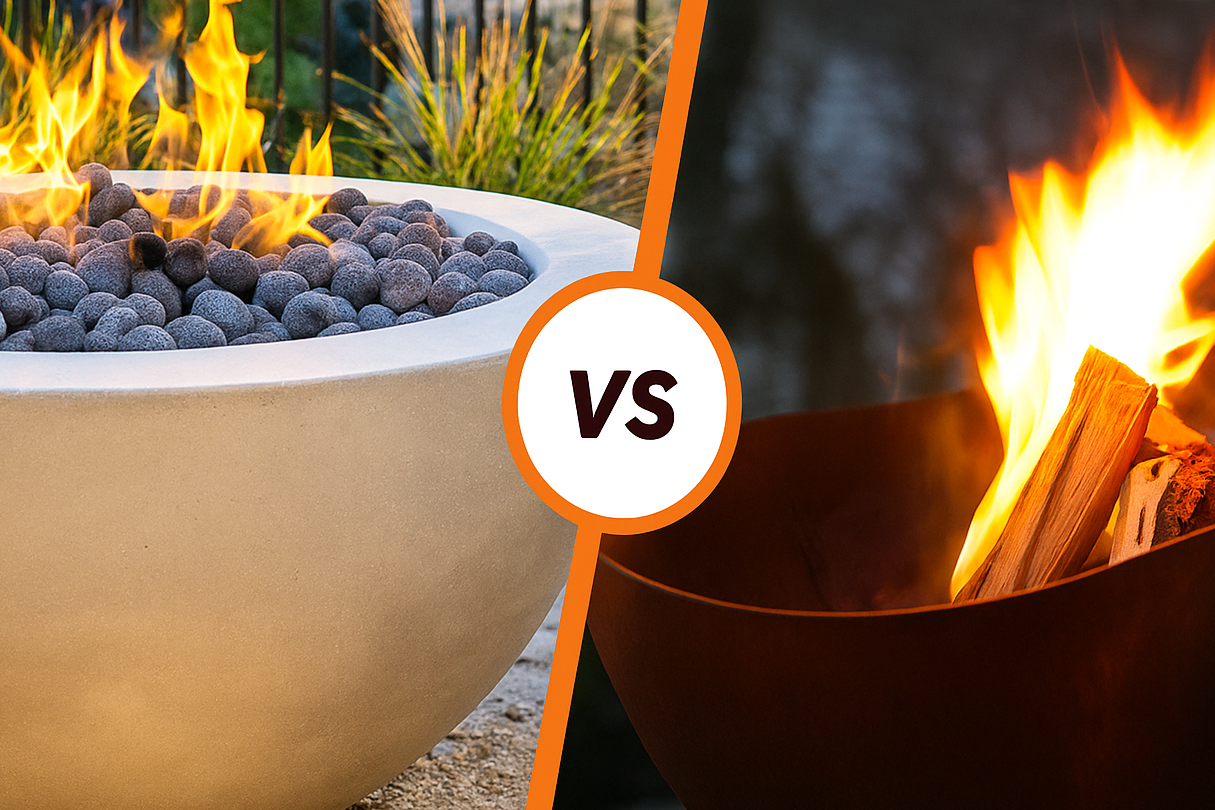
Are you choosing between a gas fire pit and a wood fire pit for your outdoor area? You are not alone. Fire pits are very popular in European gardens, patios and courtyards. The right choice depends on space, usage, budget and local regulations. This guide compares both options from a European perspective and helps you decide more easily.
1 Quick conclusion
Gas fire pits are cleaner, easier to use and need less maintenance, but the purchase price is higher. Wood fire pits create a traditional campfire feeling, strong heat and good cooking options. However, they require more work, regular cleaning and consideration for neighbors because of smoke and sparks.
2 Basic differences: gas vs. wood
Fuel: Gas fire pits use propane or butane (in Europe often with 30 mbar or 50 mbar regulators) or natural gas. Wood fire pits use logs.
Operation: Gas is started and controlled with a knob or ignition system. It is simple and consistent. Wood needs lighting, refueling and fire control. It feels more natural, but also more complex.
Look & style: Wood looks traditional and natural, with smell and crackling sounds. Gas looks modern and clean, with an even flame that fits well into contemporary garden design.
3 Important selection criteria before purchase
Space & location: Natural gas needs a fixed gas line. Propane or butane needs a safe place for the cylinder. Wood is flexible in placement, but needs good ventilation and distance from neighbors because of smoke.
Purpose: Do you want strong heat or cooking over an open fire? Wood is often better. Do you want comfort, cleanliness and quick use – especially in semi-public or commercial spaces? Gas is often the better choice.
Budget: Wood fire pits usually cost about €300–1,000. Gas fire pits often cost €800–3,000 or more. Running costs depend on wood or gas prices and how often you use the fire pit.
Rules & regulations: Check local fire safety rules, building regulations and property rules. In some places there are limits for fuels, distances, usage times and smoke – especially in cities, apartments and balconies.
4 Gas fire pits: Advantages & disadvantages
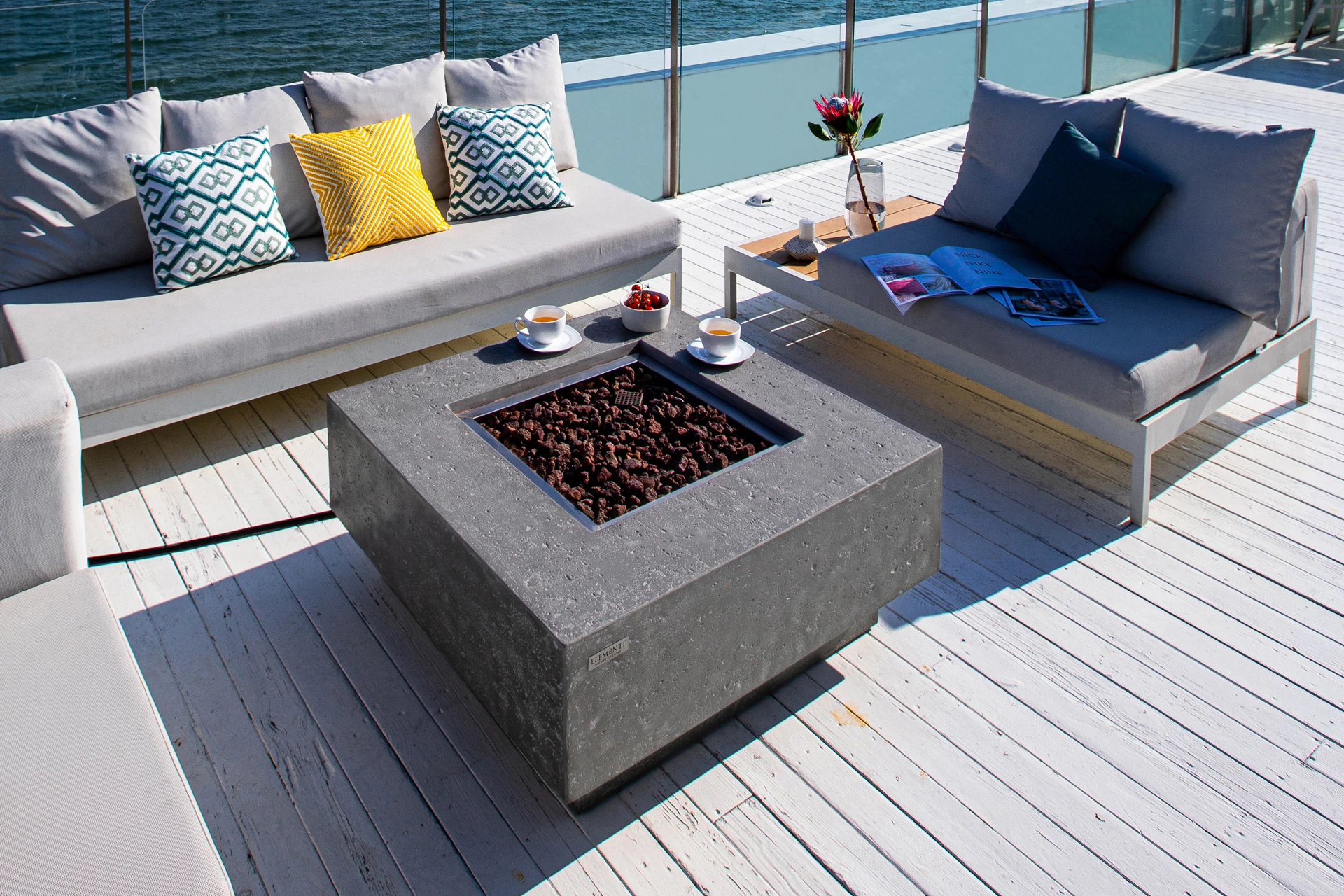
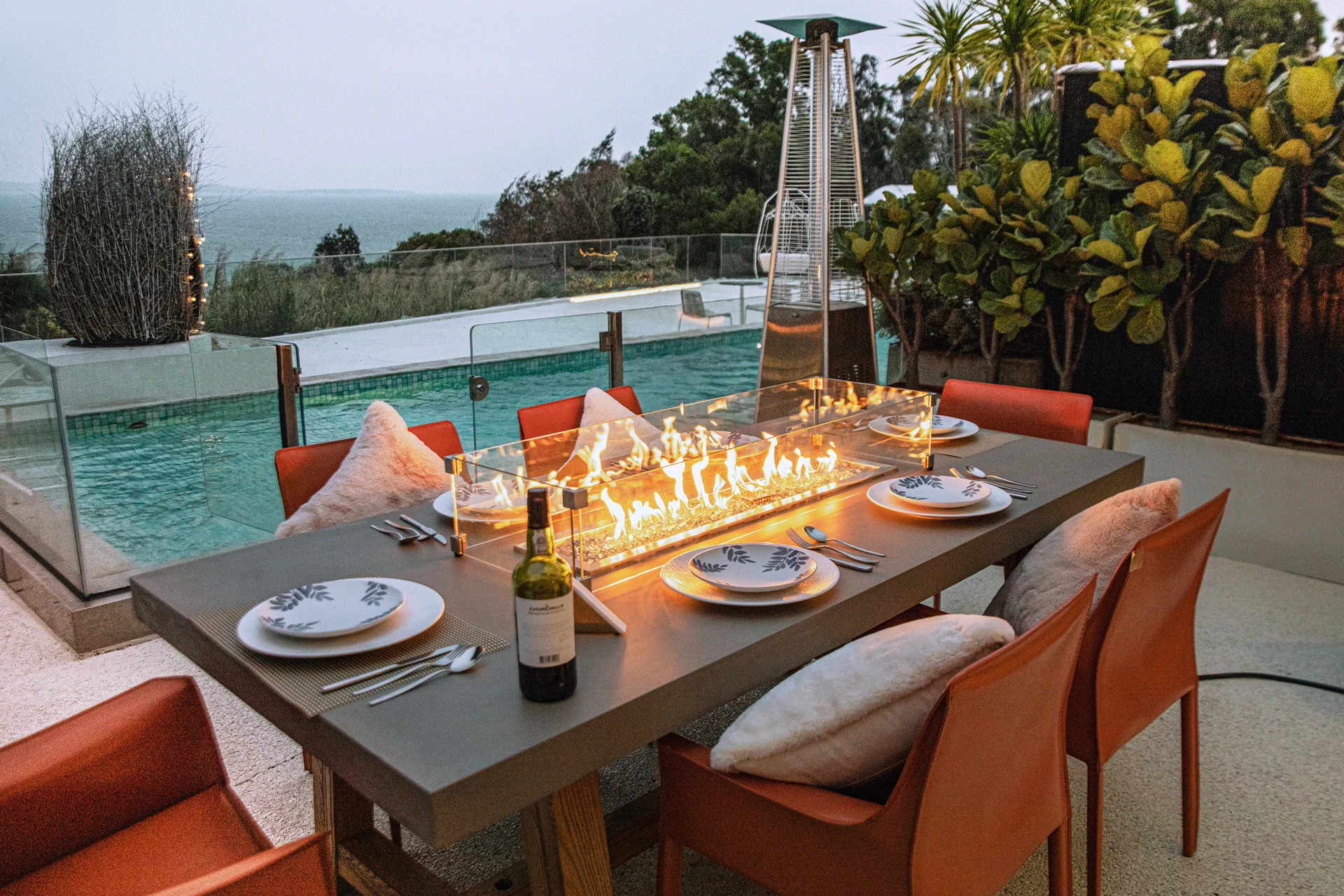
Advantages: Easy to use, fast ignition, no smoke or ash, little cleaning, stable flame, good for neighbors. Strong design options, especially as fire tables, and easy integration into outdoor spaces.
Disadvantages: Higher purchase cost. Natural gas needs professional installation. Gas cylinders must be installed and replaced safely. Cooking is possible, but often more limited than with wood.
5 Wood fire pits: Advantages & disadvantages
Advantages: Authentic campfire feeling with smell and sound, very strong peak heat, good for cooking over an open flame, strong outdoor experience.
Disadvantages: Lighting and maintaining the fire takes time and attention. Ash must be removed regularly. Smoke and sparks can disturb neighbors and may create safety risks in dry or windy weather.
6 Aesthetics & individualization
Material & design: Gas and wood models are available in stone, metal and Beton. High-quality gas fire pits often use GFRC (glass fiber reinforced concrete) for durability and premium appearance. Wood models are often made from Corten steel, stainless steel or cast iron – from modern to rustic styles.
Mobile vs. built-in: Both types are available as portable units or built-in solutions. For a built-in installation, plan space, safety distances and ventilation early – especially when using natural gas.
7 Installation, maintenance & service life
Installation: Wood fire pits can usually be used immediately if fire safety rules are followed. Bottled gas systems are relatively simple. Natural gas systems require professional installation and safety checks.
Maintenance: Wood: remove ash regularly and check for rust. Gas: check hose, regulator, connections and burner for safety. A weather protection cover increases service life.
Durability: Depends on material and quality. GFRC, stainless steel and weather-resistant steels perform well in European climates.
8 Environment & Sustainability
Emissions: Wood produces smoke and fine particles, which are regulated in some areas. Gas burns cleaner and produces less smell, but natural gas is not renewable.
Sustainable options: Use dry, untreated wood from sustainable forestry. For gas, use efficient flame settings and wind protection to reduce consumption.
9 Costs, value retention & resale
Investment: Wood has a lower entry price. Gas costs more, especially built-in systems with natural gas connections. Professionally installed gas fire pits can increase the perceived value of an outdoor space.
Long-term: Wood requires storage, transport and cleaning. Gas reduces maintenance time, but operating costs depend on energy prices and usage frequency.
10 Heat output (BTU/kW) – what does this mean?
The real heat output is a key factor. The unit BTU (British thermal unit) is often used. If you are not familiar with BTU, see our guide: “Fire pit BTU guide”. If you want to calculate the right heat level for your space and understand gas consumption, use our BTU calculator.
11 Conclusion & decision support
For clean operation, easy use and modern design, gas is often the better choice – especially in modern garden concepts. For strong campfire atmosphere, cooking and maximum heat, wood is ideal if smoke and sparks are acceptable. Consider space, usage, local rules, environmental aspects and budget before making your decision.
12 Frequently asked questions
Which is better – gas or wood? It depends on priorities. Wood is ideal for cooking and strong heat. Gas is better for comfort, cleanliness and design integration, especially in residential areas.
What are the disadvantages of gas? Higher purchase costs and possible installation requirements. Regular safety checks for hose, regulator and connections are necessary.
Does gas provide enough heat? Yes. High-quality gas fire pits provide strong heat output for typical patio use. In very cold conditions, wood can produce higher peak heat.
Is a gas fire pit worth it? Yes, if easy operation, low maintenance and modern outdoor design are important. If cost and traditional fire experience are more important, wood may be the better choice.